Wednesday, May 6, 2015
Actual Play: The Horror at the Lighthouse (part 2)
When we last left our heroes they were about to meet their host for the evening...
The Doll went upstairs to fetch her creator, Dr. Hesselius Reichmann, which gave the characters enough time to replace all the stuff they had pocketed from his cabinet of curiosities. When the doctor descended the stairs from the upper floors of the lighthouse it was discovered that he was a stout, balding man of middle years with a black beard flecked with white. His physique showed the signs of having once been powerful, but had since been wasted by calamity or disease; his mortal frame was encased in a clockwork brace that allowed him to walk.
Far from being threatening, the Doctor offered the characters shelter in his lighthouse and set the Doll to work making them a hot meal. When asked about his life, he revealed that his body had been ruined by a supernatural cataclysm, and that his wife had been left in a comatose state by the disaster as well (1). Dr. Hesselius claimed that he had retreated from the world in the wake of this personal tragedy and taken up residence in the lighthouse so as to have an isolated haven in which to attempt to revive his wife through science and alchemy. He also explained that the clockwork crabs were his creations and acted as sentries on the island; he apologized for any inconvenience they may have caused the shipwreck survivors.
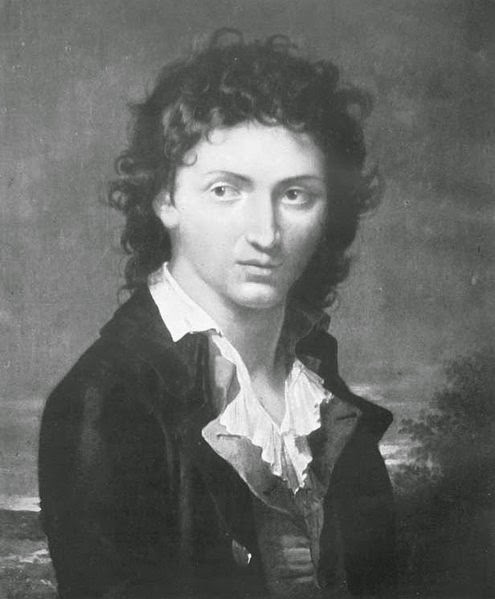
Much like the party, Reichmann took an instant dislike to the haughty empty-headedness of Martinus di Rosalba. Rosalba's obvious life of leisure and casual disregard for the pain of others rubbed this haunted man the wrong way.
However, not all was well with Dr. Hesselius. As Kahl discovered, Reichmann was clearly lying about the lighthouse's lantern. Although he claimed that the light was badly aimed because he lacked the proper materials to make it function correctly, his body language (and obvious technological resources) betrayed him on this point (2).
And yet, there was no where else to go on this horrific night, so the party took Reichmann up on his offer of a place to sleep for the evening. After they had eaten and talked, Dr. Hesselius led the party to the next floor where they were invited to bunk down. The room was dusty and disused. From the pink and yellow patterned wallpaper, this room was clearly meant to be used as a nursery, but was empty...save for an old cradle standing in the middle of the room that no one wanted to comment on (3).
Unused to sleeping rough on the floor, Martinus demanded a proper bed to sleep in. Reichmann led him up a further flight of stairs to his wife's bedroom, and then went further up to seek his own quarters. Wary of the Doctor's motives, the party wisely decided to sleep in shifts. During the first watch, a man's scream was heard upstairs.
Something was happening to Martinus. A quick check of the bedroom that the fop had been led to disclosed that he had slept in the bed, but no longer occupied it. Before venturing up the stairs to investigate, Herman decided to check downstairs to make sure that Martinus hadn't fled in that direction while the others suited up for potential trouble. Herman came face to face again with the Doll, and had a rather disturbing conversation with her in which she stated, nonchalantly, "I have meat inside me." The Doll acquiesced to a palpitation of her person, which revealed that somewhere within her artificial body beat a live human heart (4).
This is where the party's first moral quandary presented itself: Martinus was clearly a bit of a shit, but was it right to let an unwholesome fate befall him if it could be helped? It was decided that he was one of them, even if he was useless and craven. Up the stairs, then, and into the fray. The floor above the wife's room proved to be Dr. Hesselius's living quarters and laboratory. Fantastic and obscure machinery whirred, flasks of unknown chemicals burbled and boiled, and arcs of lightning leaped between arcane devices. Before the party lay two tables. On one, Martinus was bound and gagged, machinery poised to pierce his body for nefarious purposes. On the other lay a glass coffin containing the body of a pregnant woman--Jacine Reichmann, the catatonic wife of Doctor Hesselius (5).
Here, Hesselius's Reichmann's evil was unveiled: he was using the treacherous lighthouse wreck ships upon the reefs in hopes that survivors would come ashore...to be used in the hellish experiments that he believed would restore his beloved wife to him.
But how to stop this evil, and was Martinus worth saving?
NOTES
(1) - Both Dr. Hesselius and his wife were victims of diabolic intervention.
(2) - An excellent Insight check blew right through the Doctor's deception.
(3) - This floor riffed on Charlotte Perkins Gilman's "The Yellow Wall-paper," and also about a hundred other Victorian-era ghost stories that I've read. Never underestimate the power of a room empty save an abandoned cradle.
(4) - The "I have meat inside me" bit was ad-libbed in the moment. In retrospect, I'm glad no one attacked the Doll during the adventure as over the course of the game I really came to appreciate what she was adding to the adventure. She was a note of uncertainty for much of the game; she never did anything forceful or aggressive towards the characters, but her seeming loyalty to Hesselius made her an unknown factor in how things might play out.
(5) - I knew I was drawing on something here for the whole "wife in glass coffin waiting to be revived," but I couldn't quite place it. One of the players figured it out afterward: I was referencing The Abominable Dr. Phibes without realizing it.
Labels:
5e,
actual play,
krevborna
Monday, May 4, 2015
Actual Play: The Horror at the Lighthouse (part 1)

Over the weekend I had the chance to run a 5e game set in Krevborna (1). The characters included Kahl, a cleric who has had previous experience with the darkness that overruns the land; Herman, a former whaler and current bard who seems to have bad luck at sea; "Philip," a rather more savage whaler who is rather handy with a javelin; Oskar, a revolutionary-minded printer and wizard who is currently on the run.
Each member of the party had boarded the ship The Sea Raptor at various southern points heading west. However, such an uneventful passage was not to be.
The captain of the ship, Guile Robart, invited his guests to take dinner with him in his cabin. The passengers were joined by a young, curly-haired fop named Martinus di Rosalba (2), the son of a wealthy family. As each guest took turns divulging as much of their story as they were comfortable with, Martinus revealed that he had left his ancestral seat to seek his wayward sister Emilia, who had fallen prey to a romance with a member of the family's help and run away from home (3). The characters seemed to take an instant dislike to Martinus, as his conversation was peppered with classism and a casual disregard for the common man's plight.
In the late hours of the night, the passengers were awoken by the sound of frantic yelling and hammering in the holds below. After investigating, they discovered that the ship's hull had been breached upon a rocky shoal and was taking on water. Captain Robart, mindful of his passenger's life and limb, took his guests to a lifeboat, instructed them to row for the lighthouse that could be seen in the distance, and hoped that the gods would be with them (4).
After a life-and-death battle with the sea, our heroes managed to drag themselves onto the shore of the lighthouse's island. As they approached the lighthouse amidst a terrible nor'wester, the party realized two things: the lighthouse's lamp was aimed in such a way as to deceive passing ships into foundering on the rocks and that they were being approached by crab-like things whose tread sounded oddly like the march of armored men.
As it turned out, the crabs were not natural things, but rather mechanical constructs with awful scything claws (5). Scything claws that they didn't manage to do anything with; Herman quickly lured a few of the crabs into position where a boulder could be dropped on them by his allies. A few magic missiles, rapier thrusts, and thrown javelins later, and the scuttling nightmares were nothing more than piles of twisted wreckage.
More crabs appeared along the shore, so the party decided it was time to seek shelter in the lighthouse. The first floor was sparsely furnished: there was a staircase leading to the next floor in the center of the room, rough-hewn table by the fireplace, and a cabinet of curiosities against one wall. Oh, and a life sized-doll standing beside the cabinet. A life-sized doll dressed in a frilly dress and bonnet. A life-sized doll with dead eyes and a spiderweb of cracks spreading along her cold, white porcelain face (6).
The cabinet of curiosities was cautiously explored. It contained a number of human and animal skulls (including a beauchene skull), a grisly shrunken head, three chipped obsidian daggers (later revealed to be used be an obscure, ancient cult in G'Henna that practices human sacrifice to appease the god Zhakata), an obscene paperweight, and a black-lacquered box containing tarokka cards (7).
The Doll was motionless and inert as the party poked around the ground floor. However, when examined closely, she tilted her head and greeted the interlopers with a kindly, "Hello." The Doll's movements seemed...too natural, too human-like...two of the party members found themselves disturbed by her presence. Nevertheless, when questioned the Doll explained that the lighthouse belonged to Dr. Hesselius Reichmann (8), who was sleeping upstairs, and would the party like to meet him?
And meet him they would.
NOTES
(1) - The basic seed of the adventure was borrowed from the "Bride of Mordenheim" adventure in the Book of Crypts 2e Ravenloft supplement. I made heavy modifications to it and added a lot of complexities that aren't there in the original. (I find this is the only way to make published adventures actually usable, but I digress.) I also didn't want the characters to encounter a major villain like Mordenheim straight away, so I changed things up and substituted my own Dr. Reichmann instead.
(2) - Martinus di Rosalba's name was inspired by Ellena di Rosalba in Ann Radcliffe's The Italian, but I played him as Ellena's inverse: instead of a pure-hearted character who is unaware of her noble origins, Martinus is all-too invested in his aristocratic family's privilege and a bit of a foolish knave to boot. The disdain the players developed for him would factor into the moral quandaries to come.
(3) - I threw in Emilia's (possible) elopement because I had just re-read Thomas Hardy's "Barbara of the House of Grebe" a few weeks ago. Her story could be something that comes up again later if we continue with this as a series of adventures.
(4) - Herman's back-story of having been a crew member on other ships that had gone down fit perfectly here. Here's another (presumably) sunken vessel he can write a tragic song about.
(5) - 5e doesn't really have any low-level mechanical monstrosities, so I just reskinned some regular goblins for the crabs. Shhh!
(6) - I stole the idea for The Doll from Bloodborne's Plain Doll in the Hunter's Dream.
(7) - I will take any opportunity to add a cabinet of curiosities to a game.
(8) - I went through a lot of potential names before I settled on Dr. Hesselius Reichmanm. The Hesselius bit comes from the doctor in Joseph Sheridan Le Fanu's In a Glass Darkly, while "Reichmann" had just the right "Nazi doctor" vibe. Not that I'm saying that Reichmann is up to some terrible experiments on human subjects. What would give you that idea?
Labels:
5e,
actual play,
krevborna
Monday, April 27, 2015
'Zines
The first in a series of posts detailing what I am currently finding inspiring.
I. Zines
Zines were a big part of my early 90s high school experience, so it has been interesting to watch them make a comeback in recent years. If you're currently in the grips of Zine Mania--whether through nostalgia or first-blush contact with small press insanity--you NEED to check out the zines put out by Heretical Sexts.
Heretical Sexts is a small-press imprint dedicated to producing "weird words on dead trees" and "publications for discerning creeps." Full disclosure: I've contributed writing or editing to the various Heretical Sexts projects, but believe me when I tell you that these things are the real deal. The writing is out there; the voices in these zines are unique; the art and production values are all top-notch. Thus far there are three stand-alone issues you might want to grab:
My Dream Date with a Villain: 14 contributors describe their romantic encounters with infamous characters from history and fiction. Always humorous, sometimes horrific and occasionally erotic, this fully-illustrated volume includes a range of subjects including Elizabeth Bathory, Doctor Doom, Ilsa She-Wolf of the S.S., the Hamburglar, Madame Defarge, and many, many more. (Include my tale of longing for Bellatrix Lestrange.)
Forever Doomed: 28 pages of essays and comics by Tenebrous Kate taking a tongue-in-cheek look at all things doom: The Metal Mid-life Crisis of "Black Roses"; Adventures at Maryland Deathfest; Erotic Rites of the Nazgûl; Dennis Wheatley: Unlikely Icon; Style Lessons from "Curse of the Crimson Altar"; "Let Sleeping Corpses Lie."
Witch Women: Witch Women is an exploration of the many facets of the relationship between femininity and the occult. The zine features original art and essays ranging from the esoteric to the light-hearted: “Hag Couture,” cheeky advice on fashion and ritual realness by S. Elizabeth; “Ace of Worlds,” an encounter with the tarot by Tom Blunt; “The Scarlet Women,” an illustrated history of erotic magic written by Heather Drain and illustrated by Tenebrous Kate; “Darkening the Coven,” an RPG supplement by Jack W. Shear; Art by Dana Glover, Becky Munich, and Carisa Swenson. (I actually think "Darkening the Coven" is the best RPG thing I've written.)
At $5 a pop, these are a steal. The BigCartel shop is here. You know what to do. You know what to do.
* * *
Speaking of zines, I just got these in the mail from Thuban Press:
If you like the idea of kinky post-scripts to Poe's "The Cask of Amontillado" and "The Fall of the House of Usher," definitely do yourself a pervy favor and check out "In Pace Requescat" and "The Hideous Dropping Off of the Veil." For a more traditional and lovely take on a Victorian fairy tale, Julia Gfrorer's illustrated version of Oscar Wilde's "The Star Child" cannot be beat.
Tuesday, April 21, 2015
Actual Play: Blades in the Dark
![]() |
| In retrospect, Wolfram Keel probably looks a bit like Captain Flint on Black Sails |
Before I get into my experience with the game itself, I just want to take a minute to say that Andrew runs a great game. I have the quick start of Blades in the Dark, but I wasn't really able to put together how it all worked in my brief read-through of the text; Andrew, however, made the game sing in practice. He presented the mechanical bits in a really easy-to-grasp way and offered enough introductory guidance to help us along without ever feeling like he was nudging us in one direction or another. Andrew also added a ton of on-the-fly detail to the game's setting and NPCs that made the game have a very particular feel. People talk about immersion; Andrew's ability to add details that popped was all about getting the feel of the setting (weird, gritty, ominous).
My fellow player in the game was Bryan, and he pushed things forward into ever more dangerous territory at every turn (which was much appreciated by me). Bryan's character, Aldo Nyman, had all the social skills mine lacked; yet, despite our different skill sets we both chose "Daring" as our special abilities. This emphasis on "daring" came to define our new crew of thieves: we were looking to make a name for ourselves by taking on jobs (and approaching the way we completed job) in audacious ways that more careful crews would never even consider. My character, Wolfram Keel, was a weathered, perpetually furious ex-whaler whose skills leaned toward violence and skulking about. He may have killed an experienced duelist with a gaff hook in a water closet; Aldo may then have taken the dead man's identity so we could pull off an abduction. These are our unrecommendable methods, but they work.
I was impressed by how brisk the pacing is in Blades in the Dark. In a three hour session we generated our characters, generated our gang of thieves, went on two "heists," and did two episodes of downtime. The heists were short, but fulfilling. Our first adventure was kidnapping the leader of a powerful faction; through Aldo's guile, Wolfram's willingness to step into the fray, and a little help from our weirdo occult adept minions we were able to pull off a pretty amazing score. The second heist involved sneaking onto a whaling ship in plain sight so that we could steal away with some rather unusual gunpowder stored in a literal hog's head.
Oddly, or maybe not, our most nail-biting encounter in the entire session was with a sexed-up harpoonist who probably isn't even human; let's just say she has scrimshaw teeth, has a penchant for looking into the depths of murderous souls, and has an arm made of bone that was animated by plunging it into a leviathan's eye. Not the kind you take home to mother.
Even though each heist didn't take long to resolve, they felt meaty and compelling. There wasn't really any lull in the game where we planned out our strategy and prepared for contingencies. The way the game works lets you largely accomplish all of that on the fly, adding detail and depth through action and flashbacks. It felt like we got an amazing amount of fun gaming in within just three hours. In other games I've played there are interminable stretches were you're waiting for the fun parts; this was all good parts all the way through. Part of that was undoubtedly the people involved (thanks again, Andrew and Bryan), but part of it was the tight design of the game. Blades in the Dark seems like a clear winner; can't wait to play again.
Monday, February 23, 2015
Poe's Philosophy of Composition and Campaign Setting Delivery
![]() |
| art by James Carling |
Essentially, the kind of setting material I value fits into the theory of writing that Edgar Allan Poe outlines in his essay "The Philosophy of Composition." Although Poe was addressing what he valued in literature, it's a pretty good fit for explaining what I value in setting products. Poe's essay outlines three central tenets of literary composition:
Length
As Poe states in "The Philosophy of Composition," "It appears evident, then, that there is a distinct limit, as regards length, to all works of literary art — the limit of a single sitting — and that, although in certain classes of prose composition, such as 'Robinson Crusoe,' (demanding no unity,) this limit may be advantageously overpassed, it can never properly be overpassed in a poem." Clearly, Poe favors shorter literary works--works that can be consumed within "the limit of a single sitting." To Poe's mind, the immediacy of a short story trumped the expansiveness of a novel. (This is also evident when you consider the typical length of his own literary productions.)
For me, the best settings are ones that I can digest in a single sitting. I'm currently dipping into the Eberron campaign setting, and honestly there is no way I could read that hefty tome in one go. It also points to a matter of subjective taste: I prefer my settings sketchy, with room to improvise. A setting that takes more than one sitting to read through will always be too developed, or too large, to interest me fully.
Method
Poe took issue with the artistic myth-making perpetrated by the Romantic poets. According to authors like Wordsworth and Coleridge, the archetypal Romantic was someone who would retreat into nature, become inspired by the natural world because of their rarefied aesthetic sensibilities, and experience a "spontaneous overflow of strong feelings" that would be recorded as poetry. This spontaneous overflow was supposedly the raw lyricism of the Romantic poet, unleashed from the confines of the rational mind; but Poe knew better. Although the Romantics captured their impressions as they occurred, they were also ruthless editors who produced draft after draft as they polished their work before presentation. The myth of the perfect first draft as the shining evidence of the poet's soul is just public relations.
Or, as Poe would have it, "Most writers — poets in especial — prefer having it understood that they compose by a species of fine frenzy — an ecstatic intuition — and would positively shudder at letting the public take a peep behind the scenes, at the elaborate and vacillating crudities of thought — at the true purposes seized only at the last moment — at the innumerable glimpses of idea that arrived not at the maturity of full view — at the fully matured fancies discarded in despair as unmanageable — at the cautious selections and rejections — at the painful erasures and interpolations — in a word, at the wheels and pinions — the tackle for scene-shifting — the step-ladders and demon-traps — the cock’s feathers, the red paint and the black patches, which, in ninety-nine cases out of the hundred, constitute the properties of the literary histrio." The value for campaign products is evident here as well: as much as I like seeing an explosion of inspiration, I want that inspiration to be tempered by well-chosen edits and a serious consideration of how all the setting elements cohere together.
Unity of Effect
Taking his poem "The Raven" as a paradigmatic example, Poe argues that all great literature should strive to express one feeling or atmosphere. Everything within the work--characters, tone, word choice, setting, symbolism, etc.--must work in orchestrated unity to produce a singular effect for the reader.
A good setting, in my estimation, does one thing only but does that one thing well. There's a reason why kitchen-sink settings are sometimes maligned; in attempting to be everything to everyone, they're often rendered bland in the process. My preference is for a setting that has one theme or feeling or aesthetic experience writ large.
Friday, February 6, 2015
Magic Summary for Beyond the Wall
I found myself wishing there was a summary of all the cantrips, spells, and 1st level rituals in Beyond the Wall (with governing attributes for cantrips and rituals, no less), so I made one for myself. Maybe this will be helpful to you too.
Magic
Cantrips
- Beast Ken – speak with animals (Wis)
- Blessing – gives a bonus to rolls for a specific task (Wis)
- Conjure Sound – create illusory sounds (Int)
- Druid's Touch – make plants grow (Wis)
- Hexing – gives a penalty to rolls for a specific task (Wis)
- Glamour Weaving – create silent images (Int)
- Mage Light – create light (Int)
- Second Sight – see spirits and command them if you know their true name (Int)
Spells
- Abjuration – banish a spirit
- Banish Undead – make undead creatures flee
- Bar the Way – magically lock a door or gate
- Blight of Loneliness – victim fails all Charisma checks
- Brave the Flames – gain immunity to fire
- Burning Hands – flames leap from your hands
- Call the Swarm – summon a swarm of small animals
- Commanding Word – force the victim to obey an order
- Clear Eyes – you can see through all illusions
- Conjure Darkness – creates impenetrable darkness
- Entanglement – the victim is held fast
- Evade the Dead – you are invisible to the undead
- False Friend – bend the victim to your will
- Feather Fall – save the recipient from a dangerous fall
- Flame Charm – control fire
- Flash of Brilliance – blind everyone nearby
- Forgetful Mind – cause the victim to forget almost everything of importance
- Friend's Call – alert your allies to your location
- From the Brink – stabilizes a dying creature
- Great Endurance – fill your companions with vigor; ignore fatigue and poison
- Greater Illusion – create audio and visual illusions
- Healing Touch – heal wounds
- The Howling – create a deafening cacophony
- Inspiration – give allies a bonus to attacks and saving throws
- Magic Missile – cause damage at a distance
- Masked Image – appear as someone else, but not a specific individual
- Mystical Shield – gain a bonus to your armor class
- Obscurement – become hazy and difficult to see
- Opening Touch – open an ordinary door or lock
- Pass Without Trace – leave no tracks that can be followed
- Petrifying Gaze – freeze the target in place
- Phantom Skill – grant the recipient a skill for a limited time
- Reanimation – create skeletons and zombies from corpses
- Sanctuary of Peace – make it difficult for others to attack
- Sense Nature – sense supernatural influence and general disposition
- Silence – create an area of utter silence
- Smuggler's Luck – one item in your possession becomes undetectable
- Spider Climb – the target can scale surfaces
- Swift Step – gain unnatural speed and grace
- Terrifying Presence – cause fear in your enemies
- Tinker's Gift – mend a broken object
- True Strike – gain a bonus on your next attack roll
- Veil of Sleep – put the target to sleep
- Web – fill an area with sticky webbing
- Whispering Wind – send a message to another person
- Wild Call – summon animals
- Wind Ward – make an area immune to missile attacks and flying creatures
- Witch Laugh – cause the target to be distracted and incapacitated by laughter
- Word of Courage – you and your allies immune to fear
Rituals
- Arcane Experiment – determine the properties of a magical item (Int)
- Bind Familiar – summon a familiar spirit (Int)
- Circle of Protection – create a barrier against supernatural creatures (Int)
- Gather Mists – fill an area with blinding mist (Int)
- Goodberry – create berries that heal when eaten (Wis)
- Mage Armor – grant yourself magical protection from damage (Int)
- Staff of Might – enchant a weapon (Wis)
- Steed of the Sorcerer – summon a ghostly steed (Int)
- Unseen Servant – summon an invisible spirit to perform tasks (Int)
- Witch's Watchman – create a warding alarm against ambush (Int)
- Wizard's Mark – inscribe a permanent rune on a surface (Int)
Labels:
beyond the wall,
spells
Monday, January 26, 2015
Undead Templates for 5e
I wanted to make an undead wizard for 5e that was less powerful than the lich, so I sat down with the Dungeon Master's Guide and went to work with the monster creation rules. Aaaaaaaand, I promptly got bored because it was too much accounting and looking things up on a chart for me.
And then I realized that all I really needed to do was slap a few resistances and immunities on one of the NPC wizard statblocks in the back of the Monster Manual and call it a day.
Using the cheap-n-cheerful templates below you can make undead archmages, bandits, cult fanatics, gladiators, etc. Need an undead knight that is less powerful than the death knight? Major Undead template + Knight stats. Undead viking? Minor Undead + Berserker.
You could also use these with regular animals, you know, for when you need a ghostly Killer Whale.
Minor Undead
Damage Resistances necrotic
Damage Immunities poison
Condition Immunities exhaustion, poisoned
Senses darkvision 60 ft.
Major Undead
Damage Resistances bludgeoning, piercing, and slashing from nonmagical weapons
Damage Immunities necrotic, poison
Condition Immunities charmed, exhaustion, frightened, paralyzed, poisoned
Senses darkvision 60 ft.
Incorporeal Undead
Damage Resistances acid, fire, lightning, thunder; bludgeoning, piercing, and slashing from nonmagical weapons
Damage Immunities cold, necrotic, poison
Condition Immunities charmed, exhaustion, frightened, grappled, paralyzed, petrified, poisoned, prone, restrained
Senses darkvision 60 ft.
And then I realized that all I really needed to do was slap a few resistances and immunities on one of the NPC wizard statblocks in the back of the Monster Manual and call it a day.
Using the cheap-n-cheerful templates below you can make undead archmages, bandits, cult fanatics, gladiators, etc. Need an undead knight that is less powerful than the death knight? Major Undead template + Knight stats. Undead viking? Minor Undead + Berserker.
You could also use these with regular animals, you know, for when you need a ghostly Killer Whale.
Minor Undead
Damage Resistances necrotic
Damage Immunities poison
Condition Immunities exhaustion, poisoned
Senses darkvision 60 ft.
Major Undead
Damage Resistances bludgeoning, piercing, and slashing from nonmagical weapons
Damage Immunities necrotic, poison
Condition Immunities charmed, exhaustion, frightened, paralyzed, poisoned
Senses darkvision 60 ft.
Incorporeal Undead
Damage Resistances acid, fire, lightning, thunder; bludgeoning, piercing, and slashing from nonmagical weapons
Damage Immunities cold, necrotic, poison
Condition Immunities charmed, exhaustion, frightened, grappled, paralyzed, petrified, poisoned, prone, restrained
Senses darkvision 60 ft.
Subscribe to:
Posts (Atom)


