Thursday, September 8, 2016

Autobiography by Morrissey

If autobiography is an act of post-facto self-invention, than surely the expansion or contraction of experienced time in one's narrative is the primary tool of emphasis trending toward definition. For most, Morrissey is defined by being (in) the Smiths; but in his Autobiography this is a time in his life that simply happens and then ends once it has run its course, with no delineation of change or effect on the subject. It's a period of his life that is barely there, or more properly, he's barely present within it. 

Instead, Morrissey is defined, to Morrissey himself, by the war between a monolithic, derelict childhood that is pervasively always present and the momentary transcendence found in early discoveries in poetry, pop music, glam icons, and film. Once childhood is over, or the poem ends or the needle leaves the groove or the idol disappoints or the credits roll, it's all still there--an eternal struggle of grey versus starlight, waiting to swallow us whole. 

The earliest tale-telling here is Morrissey at his best. It evokes a place, a time, and a person at odds with the previous. It hurts to read, such aches and stifled longings that are dimly understood, and yet it is thrillingly stated, equal parts sophisticated and salted, and eminently quotable. Read it aloud to your friends, and demand that they read it back to you. Nevertheless, as Morrissey's life takes off, the singing of that life slows down.

At points it crawls.

Later on in years, it seems as though the Smiths were only experienced through the endless court case surrounding who gets what money. And it reads as if endless; perhaps that was purposeful—the reader experiences the interminable disappointment of legal wrangling—but it's deadening and deadly to actually read. They're too strenuous, too burdensome, these private lashings in the dark, and the book never really recovers from this hefty section of recrimination and condemnation. (Other people's money is never that interesting.) Morrissey continues on his narrative, but it's plain that he's exhausted himself somewhat. There are still moments of sharp wit and keen observation, but they come on fewer in number and slackened in pace. More self-quotations seep in to fill the gaps, but instead gasp and wheeze for air. Worse, after the uphill climb the reader must be exhausted.

At least Morrissey tells a ghost story (maybe; hopefully; the alternative is too gruesome to contemplate) and notices some raccoons.

Tour dates, yes, but this is formulaic. Played at ____; the crowd was young and beautiful and especially young; ________ is a wonderful place; Kristeen Young (for some reason); ________ died and I cried myself empty; saw __________ backstage and we exchanged knowing smiles. Yes, and? Morrissey slinks away into the night.


Wednesday, September 7, 2016

Why Adventures Start in Taverns

Dreaming when Dawn's Left Hand was in the Sky
I heard a voice within the Tavern cry,
"Awake, my Little ones, and fill the Cup
Before Life's Liquor in its Cup be dry."
- The Rubaiyat of Omar Khayyam


Adventurers are people who realize that life, and all its attendant pleasures, is fleeting. Even reaching name level--that glorious height of being known, respected, and possibly feared--is but a respite before the dust of ages erases all fame and infamy from the book of life.


And so they go to the tavern to await the next clarion call, these "Little ones" of oft-ill repute, that rouses them to grasp at Life's liquor in dark, dangerous places before the inevitable drinking of that fated and final cup. To always seek that next ephemeral hoard of gold and glory, the vain hope to forestall the inevitable by conquering or building a kingdom, to pursue the great dream with the coming of the dawn--that is what is best in life.

Come, fill the Cup, and in the Fire of Spring
The Winter Garment of Repentance fling:
The Bird of Time has but a little way
To fly---and Lo! the Bird is on the Wing.

Monday, September 5, 2016

Under the Demon Sun


The way to Golgotha from Scarabae was long and hard; it left dust in their mouths and grit between their teeth. All they wanted was a drink to wash it all back down, but no such luck, partner. Outside town they were greeted by the sight of a group of men frantically digging graves with spade and shovel. Suspecting them to be waylayers or worse, the duo questioned the men closely. 

Apparently the dead men to be buried hastily were discovered in the grip of rigor mortis; the working supposition was that they were loggers from a nearby camp. Before they were tossed down six feet into the waiting earth, Erin Landry got off her horse and examined the bodies. Erin had been a nurse in the Kobold Wars; some say she knew more about the frail mortal shell than most doctors. To her eyes, the corpses appeared to be badly bruised, and they evidenced puncture wounds not caused by blade or bullet. The wounds also oozed a thick green fluid that wasn’t blood.

Leaving the gravediggers to their task, the pair quickly located a saloon with the inauspicious name "The Forty Widows." About to kick back their second bourbon each, Erin and Saul had front row seats for a gruesome display: another customer pushed back his chair from his table, doubled over, and began spouting blood like a sanguinary fountain. His back erupted in a rather unappetizing shower of gore as two tendrils sprouted from his convulsing
body. 


God damn it.

The scant few other patrons panic, of course, and stampede for the doors–but not before the writhing, tentacled man picks off a few of them. Saul sighs, slaps leather, and lets his two six-guns sing their songs of death and destruction. Ever more cautious, Erin unslings her rifle, keeps a wide circle of distance between herself and the thing that used to be a man, taking shots calculated to put it down hard.

If that wasn’t enough of a spit in the eye, in come crashing a posse of shambling, dead-eyed fucks drooling a viscous green mess all over themselves. Hell’s bells, they’re the loggers Saul and Erin saw being buried outside of town.

The monstrosity and his shambling pals get a few licks in on them, but at last the gunfire puts paid to this high weirdness. The shambling men lie inert, and the tendril-sporting fella crashes to the sawdust dead. It took more bullets than any living thing ought to.

The barman reappears from cowering behind the bar. A brief conversation discloses that the man was also a logger from the nearby camp. This sounds like something that the town fathers might pay to have looked into. Time for a conversation with whatever passes as a mayor in Golgotha about the possibility of a reward.


Tomorrow they ride for the logging camp.

* * *

Before violence between our duo and these gristle-faced loggers even has a chance to rear its ugly, misshapen head, a third party introduces itself to the situation: the loggers from the camp return, but not in their natural states. Like the loggers who came crashing into the saloon yesterday, these men and women have been rendered dead-eyed and shambling. As they emerge from the treeline, they moan and stumble toward their camp, each drooling a thick, green mucus that fills the air with a strange arboreal smell. 

Accompanying the loggers is a black bear whose fur erupts in enormous briars and thorns. Someone has strapped metal plates to the bear as a kind of makeshift armor. 

Hands up, who wants to die? The loggers from the other camp cut and run, like a bunch of gizzard-licking cowards. Not Saul and Erin, though. Guns out, blazing, filling the air with that fire-and-brimstone ricochet of bullets. Erin and Saul play cat-and-mouse with the shamblers, using tents and hastily-erected lean-to buildings for cover as they lure the drooling beasts out into the open to be shot down. There’s no getting around the bear, though; it charges Saul, knocking him down and sending his six-shooters flying from his grasp. As its claws come down, a blazing red shield springs up and takes the worst of the bear’s assault.

It’s a good thing he offered unholy prayers to the red-handed Hanged Man that morning, else the bear would have torn him open from stem to stern. Saul hacks at the beast with a tomahawk he "liberated" from a tribe of serpent-worshiping savages, and the ever-mauling bear makes a break for it and begins to run through the woods. Erin wings it with her rifle, but doesn’t drop it. Nevertheless, now they’ve got a convenient trail of blood to follow if they so choose.

* * *

Hard decisions.

With that monstrous, thorn-bedecked bear run off, Erin and Saul could sit a spell and tend to their own wounds (which are, at this point, considerable). But the bear is their best lead in finding out what flavor of hell has broken loose out here among the logging camps, so maybe they should follow it now before the trail goes cold. Then again, this might be a good time to head back to Golgotha and renegotiate with the town fathers for taking care of this spate of trouble.

Much as it pains him to admit it, Saul grudgingly knows that he’s in no shape to go after the bear. Erin has a solution; she rustles around in her saddlebag until she finds a fresh bottle of whiskey, sits down with it in the lotus posture, closes her eyes and begins to chant. Now, Erin Landry is what you’d call a "plain woman." You wouldn’t turn your eyes from her in disgust, nor would you ever spare a second to think her beautiful. But as she chants, Saul stares in wonder as face changes–becoming bright, alluring, and wicked. Saul feels a sick feeling awaken in his gut as he looks at her, for the low words she repeats are words given to her by the Empress.

When the chant ends, Erin is road-worn again, no longer comely and fair and serpentine. She offers the bottle of whiskey to Saul; the slug he takes from the bottle burns going down, but it also stitches his wounds together from the inside. They pass the bottle back and forth, and are restored. 


Time to see about that bear.

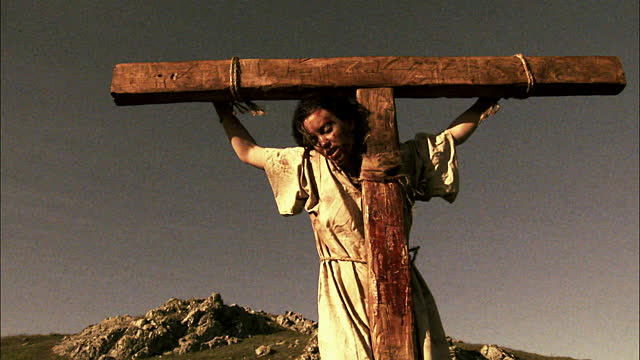
The trail is easy enough to follow, up to a point. Then the way branches off in two directions with no clear indication where the bear went. Misdirection is afoot. Saul and Erin choose the right-hand path, which carries on for a bit before opening out into a small clearing. At the center of the clearing is a large wooden cross; the lumber used in its construction looks an awful lot like the rough wooden plants used back at the logging camp. Nailed to the cross is the twisted and broken body of a logger.

"Aww, hell no," Saul growls. He unholsters his pistols and puts lead into the body on the cross. His intuition served him well, as the woman’s eyes flutter open and her face twists into a grin as she rips herself free from her own crucifixion. The thing eats dirt before it can even reach Erin and Saul. 

Pushing on, then. Deeper into the woods they go, until they arrive at another, larger clearing. At this center of this one is an enormous, warped tree that heaves and shakes as though breathing. Surrounding it are the men from the second logging camp who ran off during the fight with the transformed woodsmen. They glare at Saul and Erin. 

"You shouldn’t have come here," one of them mutters.

Something like a man, but green of skin with gnarled branches for arms, acorns for teeth, and leaves for hair emerges from the pulsating tree. The bear emerges behind him, its wounds bandaged with greenery. Guns unslung, of course. "Let’s parlay, if you’re able," says Erin.

The Green Man gestures for the loggers to hang back a pace. In a voice ancient and deep, he explains that Saul and Erin now stand at the Sacred Heart of the Woods, and that the loggers from Golgotha had begun to cut too far into forest for their lumber. Only these loggers, he gestures to the men around him, have offered the proper blood sacrifice to maintain the balance. Perhaps the town fathers of Golgotha would be willing to pay a blood tithe to the Woods so that all could remain in agreement, and no more violence or transformation of its men would be necessary? Such a bargain would require a lot of blood...

This is a dark bargain to strike, but in their heart of hearts both Erin and Saul know that it is one that the town will readily assent to. Part of them would like to just open fire and put an end to this here and now, to strike a blow for progress against this demon-twisted aspect of nature. But this isn’t that kind of world anymore; continued existence is paid for in shed innocence. And so they deal; the Green Man agrees to a truce, Saul and Erin will take his offer to the town and return in the morning with an answer. Blood will water the soil and strike the balance between the natural world and man’s coexistence with it once more. So it goes under the demon sun.

Sunday, September 4, 2016

Total Skull - August 2016

Things that brought me delight in August, 2016:

Music


Marissa Nadler, Strangers
(It's trite to call Marissa Nadler's unique style of drear-pop haunting, and yet, what else could it be?)


Myrkur, Mausoleum
(acoustic versions with a choir turn Myrkur's black metal into beautiful elegies)


Opeth, The Candlelight Years
(I avoided Opeth for a long time because the albums I had heard were very prog-rock and very noodling, but it turns out that their early stuff is well within my range of sonic interests.)

* * *

Books


Octavia Butler, Dawn
(I'm really not much of a science fiction reader, but this was pretty amazing. But the amazing part was the science fiction elements; the literary display of human nature is the real draw in Dawn.)

Film


Ginger Snaps
(Although horrific monstrosity as a metaphor for puberty is a pretty well-worn idea, I still think Ginger Snaps is one of the best examples of how the convention can be done well.)

* * *

Gaming


Tome of Beasts
(A great selection of monsters to fill in the gaps of 5e's Monster Manual. All the new fey and undead were especially welcome.)

Friday, September 2, 2016

Looting a Tomb with a Saint's Permission

While Luka and Tristan rested after their sojourn into the Grail Tomb beneath the Church of St. Othric, Kylic kept himself busy burning the corpses of the witches and aberrant things they had killed; Kylic seemed particularly interested in "bathing" in the smoke given off by the funeral pyres. Tobias Rune, scientific diabolist, arrived in time to bolster the group's next expedition into the dark places beneath the church. 

Back down into the frigid depths, then. Tobias was given something of a tour of the places Luka, Tristan, and Kylic had already been--they hoped he might be able to tell them more about the things they had previously discovered. Sadly, no one interacted with either the carved skull or the black mirror as they sat upon their particular altars. Mysteries remain unsolved!

However, some mysteries were further unraveled. Piecing together the images inscribed throughout the Grail Tomb alongside some of the history of St. Othric that Pen Bennett had previously dredged up told a tale of the ages: at some point before his martyrdom, St. Othric confronted and fought a dragon upon a peak of the Nachtmahr Mountains; Othric was victorious against this creature of gluttonous sin, but did not slay the beast; rather, Othric subdued it, renamed it Volamnus the Sacred Flame, and bade it put its ravening gluttony to good use; Othric would later bind and bring monsters who were apt to be reformed in Hell when killed on earth (such as fiends) to Volamnus, who would consume them--destroying the essence of their souls so they could not be reborn to plague mankind once more.

The group again heard the sound of sorrowful singing resounding throughout the main chamber of the underlevel. Kylic's mocking remarks about bones caused a showered of brittle remains to scatter from the room previously found littered with pulverized skeletons. Investigating, Kylic, Tobias, Tristan, and Luka found themselves confronted by the specter of a woman clad in leather armor. 


She explained that her spirit, and those of her companions, was trapped in the Grail Tomb by the powerful and containing blessings that had been placed upon in by the ancients followers of St. Othric. Her cohort had entered the Grail Tomb to rob it of its treasures, but had been crushed by some unseen guardian for their troubles. She also mentioned that she was looking forward to watching this new group of interlopers meet their demise, so that she might have new company with which to while away the coming centuries. Kylic attempted to use his holy powers to set the woman (whose name was neither asked nor given) free from her imprisonment in the vaults, but alas such a feat was not in his purview. 

Exploration continued. Tobias was able to identify the glass eye that Luka had destroyed in the previous foray beneath the church: the object likely contained an eldritch being known as the Watcher of the Equinox, a herald of the Elder Scholar. The carvings upon the walls that Kylic uncovered with his thaumaturgy confirmed that the Watcher of the Equinox was likely defeated by St. Othric and imprisoned within the Grail Tomb. (But why wasn't the Watcher fed to Volamnus to destroy it utterly? Another mystery unanswered, for now.)

In another chamber the group discovered a life-size statue of the church's patron saint. When Tristan put his hands upon it to move it, it began to change color and form--becoming a red-tinged, hooded being with furred and claw-like hands. Put to the question of who (or what) it was, it introduced itself as Ventromere, and asked the group to stand aside from the door so that it might leave peaceably. Wasting no time with parlay, Kylic attacked. The thing responded in kind, its hood falling back in the melee to reveal a fox-like head replete with a ravening maw. The concerted effort of the party managed to slay the thing calling itself Ventromere--its body turning to rotten globs of meat as it died--but not before it had wounded Tristan, Kylic, and Luka with its polluting claws.

A horrid realization set in among the group: it was clear that the creatures and beings they were encountering in the Grail Tomb had been imprisoned there by the faithful of St. Othric, so what if "killing" these creatures was actually setting them free to reborn again into the world? 


Spiteful applause was heard issuing from the hallway; the ghost had been watching them. The apparition also noted that three of the party had received "the black mark" from Ventromere. Checking their wounds from the fight with the fiend revealed a curious black "infection" festering at the edges of where they had been slashed by the thing's claws. Tristan swore that he would help set her free if she would steer them clear of further danger; she became much more helpful at that promise, and guided the group to the stone doors that shielded St. Othric's tomb. 

After a bit of a struggle with the doors, the group uncovered a chamber with niches holding the remains of the ancient and holy dead. Alcoves with unlit candles lined the walls and a stone tomb decorated with the carved form of a knight in armor clutching a greatsword lay in the middle of the room. As they entered, the candles sprang to life and the room began to take on a heat that was welcome in the otherwise icy depths of the Grail Tomb. 

Prayers were offered to St. Othric; a voice spoke not aloud, but rather within the heads of all present; oaths were sworn to uphold the mission of St. Othric: those present would take up the cause of the destruction of the undead; the saint asked what it could do to embolden the foursome to carry on his crusade; boons were asked for, and granted: Tristan was told to open Othric's crypt and to take the saint's armor as his own; Luka was told to take the saint's medallion and use it to gain entry to the treasure chamber found prior without fear from assault; Tobias was instructed to take the skull from the altar (but not to let anyone else touch it); Kylic requested to take one of the saint's fingerbones so that he might construct a compass that always points to the greatest threat to the land.

The treasure was conveyed back up to the main floor of the church. The ghost asked them of their promise to set her free, but they found that this was not in their power to do. A promise broken! Surely that won't have ramifications in the days to come...

Oh, and the blackening around the wounds caused by Ventromere begins to spread; little by little, more flesh is turned black and horrid as it creeps toward its end.

* * *

The Spoils

XP

675 each

Loot
3112 gp in copper, silver, electrum, and gold coins—all old coinage no longer in circulation, but it all spends the same

15 holy symbols of St. Othric (worth 5 gp each)
Seventy-five brass syringes (worth 2 gp each)
A set of six copper chalices with silver filigree, depicting the ancient Lamians (worth 25 gp each)
2125 gp in gemstones, gold ingots, and assorted jewelry

Eight warhammers and six war picks
Three rusted suits of plate armor, nine rusted shields, five rusted suits of ring mail, eleven rusted helms, and six rusted breastplates (worthless)
Four rusted greatswords (worthless)
7,000 wooden coins painted gold (worthless)
Fifteen thin, leather-bound prayer books

A trunk filled with six fine dresses and gowns, all remarkably well-preserved but hideously out of style (worth 25 gp each)
A bronze crown encrusted with emeralds (worth 750 gp)

A silvered rapier with a hilt of scarlet glass - silver rapier +1 to hit, +1 to damage, grants another attack as a bonus action, requires attunment

The armor of St. Othric - full plate, the wearer is immune to critical hits, requires attunement

The engraved skull of Iokanaan - requires attunement, the bearer can ask Iokanaan three questions upon awakening him—he knows quite a bit about arcane lore and undeath

The fingerbone of St. Othric—always points toward the current greatest enemy of St. Othric, grants the bearer +1 to all saving throws, requires attunement

Inspiration
Tobias, Luka, Tristan, and Kylic all get Inspiration if they didn't have it previously

Renown

Thursday, September 1, 2016

What Happened in 1266?

Some of the best game setting inspiration is a casual browse through Wikipedia because the history of the real world is so much weirder and wonderful than any purely fictional setting. Did you know that you can basically search for any given year on Wikipedia and get a nice little list of interesting things that happened over the course of 365 days? Even if you want to bend history a bit, or add fantasy into the mix, it gives you plenty to work with.

For example, let’s say you want to run a medieval fantasy game...set in 1266. Here’s some adventure seeds I came up with on the fly while reading the Wikipedia entry for that year:

  • Charles of Anjou makes war against the wicked Prince Manfred of Otranto at the Pope’s behest. Manfred’s Satanic rule of Sicily must be stopped at all costs! (Why not combine this historical event with Walpole’s The Castle of Otranto?)
  • Mary de Ferrers, a noted witch steeped in occult knowledge, has sealed herself within Liverpool Castle; the agents of King Henry III have so far been unable to overthrow her defenses and force Ferrers’s surrender to the crown. (In truth, Ferrers just surrenders...but why not spin this into a siege scenario with added witchcraft?)
  • The Scots battle the Norwegian Vikings over the Hebrides. (Anytime you have Vikings you pretty much don’t need to add anything else.)
  • A civil war is being fought on English soil; a group of barons led by Simon de Montfort challenges the forces led by Edward Longshanks–in the balance hangs the threat of the king’s submission to the Magna Carta and the dissolution of England’s absolute monarchy. (Ditto civil wars.)
  • Niccolo and Mafeo Polo have returned from the Pleasure Dome of Kublai Khan with wondrous reports of the wealth and magic of that realm. Kublai Khan wishes to know more of Christianity and the Pope is casting about for a few good envoys. (Mixing a real medieval voyage with a bit of Coleridge is my peanut butter and chocolate.)
  • The Mamluk Sultan Baibars has recently captured the castle of Toron from the crusaders; it must be won back to secure further footholds in the Holy Land. (Crusades are plenty action-packed and weird on their own.)