Sunday, October 9, 2016

Theatre of Fear and Horror

Mel Gordon's Theatre of Fear and Horror: The Grisly Spectacle of the Grand Guignol of Paris 1897-1962 is many things under one set of covers; it's part history of the macabre Grand Guignol theatre, part analysis of the appeal of the theatre's horrific spectacle as popular entertainment, a catalog of the kind of plays that were performed at the theatre, and a reproduction of a few scripts and original documents from the theatre's history.

The historical section of the book is brief. It reads as a survey, primer, or overview; it could be that much of the Grand Guignol's history has been lost and thus can't be related, or it could be that the ups and downs of the theatre's business isn't nearly as interesting as the violent and excessive productions that took place on its stage.

If Gordon has a fault as a writer on historical oddities, it's that he tends to lean toward the mythology of his subjects rather the historical record. Some areas of the history are so thin that their inclusion feels perfunctory; the section on the kind of special effects used during performances amounts to "They used a lot of fake blood and other things." It's a shame not to cut deeper when talking about the Grand Guignol.

Gordon's analysis of the Grand Guignol connects its drama to the turn of the century French fetish for naturalism, but that only seems like half the story. The Grand Guignol certainly began as an enterprise to bring naturalism to the stage, but its evolution as a theatre specializing in horror means that other unaccounted for influences became interwoven with that initial artistic premise; as de Lorde's essay makes clear, there is a heavy debt to the Gothic that just doesn't factor into Gordon's appraisal of the kind of art produced for the Grand Guignol's stage even though the lineage of Poe and his antecedents looms large in the theatre's melange of influences.

The capsule summaries of a selection of plays from the Grand Guignol's history--from sex farces to its infamous shockers--are interesting, as far as they go, but the cataloging of the plays just leaves you hungry for the real thing. The historical documents, such as Andre de Lorde's essay on fear in literature and Maxa's "autobiography," fare a bit better as historical curiosities. The color plate reproductions of posters advertising the theatre's gruesome wares are quite nice. The book concludes with two scripts from plays performed at the Grand Guignol. Reading the plays is, of course, a pleasure secondary to seeing them performed, but even so the scripts give a sense of why people were attracted to the theatre and became habitual attendees. 

Overall, the book feels slighter than it should--especially for a revised edition. Still, with so little published on the Grand Guignol, Theatre of Fear and Horror is an ideal starting point if you're interested in the topic.

Thursday, October 6, 2016

Total Skull - Horror Movies Watched in Sept. 2016

October is traditionally a month in which I watch little else but horror movies, but the spookshow train left the station a month early this year. Horror flicks I watched in September, 2016:


Rob Zombie's 31 isn't a surprising movie. The plot, which centers on a group of carnival workers being abducted and brought to a nightmarish factory to be hunted down by crazed killers in a contest put on for the enjoyment of rich folks, mixes "The Most Dangerous Game" with a hellish take on American Gladiators. Although that premise is somewhat well-worn at this point, and the film itself sometimes recalls Zombie's prior (and better) movies, there is something interesting in the commentary about how the underclass gets pitted against itself for the benefit of the enfranchised in America. Also, forget Suicide Squad, 31 has the better Joker.


I originally saw Rob Zombie's Halloween remake in a theater where, oddly, Alice Cooper and his band and crew were sitting nearby and watching also. I remember having mixed feelings about it at the time, so I thought I would give it another viewing to see if my impression of it would change. I always thought the first half of the movie, in which we get a long look at Michael Myers's terrible home life and the events leading up to him being locked up as a dangerous killer, worked well to establish a gritty, grindhouse tone; this time, I found the rest of the movie more compelling--Myers having a reason to stalk Laurie Strode adds texture to the surface of the slasher genre, as does the film's lurid ending.


Jennifer's Body is another movie I couldn't get on board with the first time I saw it, but I have since come to enjoy it on its own kitschy level. I think the movie would be stronger if it were willing to go further into horror territory at points instead of hovering in the borderland of horror-comedy, but the parts of the movie that work do work well. It is crazy how dated many of the references and allusions are, not even ten years later.


Whoever recommended this to me owes me a god-damn apology. Utterly devoid of anything interesting, Oculus is a movie content to drift in a Sea of Beigeness. Can we call for a moritorium on horror movies as metaphors for white people in bad relationships? I knew I was in trouble as soon as I saw the Blumhouse logo come on screen.


I avoided the sequel to The Woman in Black for a long time; I really liked the first one, but Angel of Death seemed destined to be a hollow capitalization on the previous film's success. But it turns out that this is a decent movie. It is not nearly as atmospheric as the original film, and relies far too much on audio to provide moments of fright, but this is a better than average take on the British ghost story. It's the Atonement of horror movies.


It's hard to believe that a movie with two women cited as co-writers in the credits has such a superficial take on the horrors of the beauty industry. Much Nicholas Wending Refn's earlier effort Valhalla Rising, The Neon Demon posits that style can completely replace substance. I...disagree. Although the visuals and imagery are often striking, there was not nearly enough story here to make for a satisfying experience. 


If Wake Wood is the Irish answer to Pet Sematary, it clearly didn't hear the question properly. There is the shadow of a good idea here, but it's let down by the low budget and lack of commitment to fleshing out a story. The absence of any surprising or twists on familiar burial ground also plays heavily to the movie's detriment; turns out that raising the dead is a bad idea, who would have thought?


The Quiet Ones is a great example of how aiming for a PG-13 rating can squander any potential a movie might have. There was maybe a better film struggling to get out of this one--the 70s British setting had potential to go in a doomy direction or a psychedelic occult direction, the premise had a bit of Machen and Wheatley to it--but the movie's unwillingness to go there held it back from being anything more than mediocre. I'm more and more convinced that if you're going to make a ghost movie you have to commit to going Full Uncanny.

Monday, October 3, 2016

The Diplomatic Manse of the Unseelie Court


While the rest of the party recuperated from their trip to the doomed village of Eisengraz, Tobias and Tristan consulted the various resources at their disposal--student of the arcane Ivara Olashenko, high-ranking cleric Artem van Hoven, and the semi-deceased wizard Jokanaan--about the nature of the angelic being that has seemingly set Luka Lillithian on the path of murdering a priest. 

They learned that Celestine the Dove's name was formerly an appropriate appellation; in generations past, the Dove would descend from the heavens at times of great strife to make peace among would-be combatants or to convince men and women away from violent courses of action. There are no records of Celestine arriving at Eisengraz to prevent its destruction by inquisitors looking to stamp out heresy in the village, but it may be the case that that part of the church's role in its destruction has been suppressed or left unrecorded. What is evident, however, is that Celestine disappears from the historical record directly after the immolation of Eisengraz--she had not been heard of since, until now. Artem, in particular, was very interested in learning her current whereabouts and made Tristan swear that he would bring him any new information uncovered in that line. And, should the need ever arise, Jokanaan informed Tobias party that the most efficient way to battle against the Dove is to use enchanted weapons and powerful magic.

Their research leading no further, Tristan and Tobias cast about for something to get involved in. Reports have been circulating Chancel for some time now of frequent sightings of the fey in the Umberwell woods just north of the city. Going into the thick forest of Umberwell meant trekking by foot; however, as deep as the woods are, the duo happened upon an unnatural clearing--at the center of which stood a strange manse. The building was not a construction made by mortal hands: instead of wooden planks, the walls were of living wood that grew from the soil itself; the roof was a canopy of greenery; the windows were translucent panes of something like milkweed pod. 

A more conventional door stood at the top of steps crafted from roots and unearthed stone. Malphas the imp was sent to reconnoiter the building, but found no other entrances or even signs of habitation. Tobias could tell from the motif of interwoven ivy, moons, and stars that this was likely an abode of the Unseelie fey. Knocking on the door produced no response, but it proved to be unlocked and easily entered.

The interior of the manse was a satire of a grand human dwelling. Tiles of stone heaved up from the earth comprised the flooring, tangles of roots around which danced will o' wisps made do as chandeliers, and what furniture they saw seemed to grow from the soil as plant-like approximations of man's handicrafts. Doors abounded in the manse's foyer, and so they set to exploring.

In what appeared to be a dining room--it featured a long dining table set for guests--they found a lone red-headed child dressed in a pinafore holding a knife and fork. The somewhat petulant child explained to Tristan and Tobias that she had been taken from her family by the fey, and also that they had stolen her name. Later, when the duo would attempt to take the child with them as they left, she demonstrated the extent to which she is entrapped in the manse: when she tried to step foot across the building's threshold, she was snapped back as if drawn by an invisible rope tied round her waist and dragged through the house, where a door ominously clapped shut as she was pulled into the ballroom.

Listening at the door of another room revealed the sound of male voices in conversation. Knocking on this door silenced the voices, then the door was thrown open, revealing three men in ornate armor chased with blood-red enameling. Tristan recognized the dragon heraldry on their armor, and knew them to be Knights of Lilith--warriors sworn to the service of Countess Alcesta, the vampiric ruler of Lamashtu. The trio of knights offered Tristan and Tobias wine and poetry, but were declined; all the while, Tristan was fighting the urge to attack these willing servants of the undead, but ultimately the knights were left to their drink and their verses.

Other strangeness was unveiled as the pair explored further. Although there were no other apparent entrances into the manse, three doors led "outside." One door led to a frozen arbor of trees coated with a thin layer of ice, another to a pair of blazing bonfires around which cavorted laughing maidens whose hair was tipped with flame, and a third to a pool of dark water whose surface was broken by the appearance of a pale woman's hand before it disappeared back into the depths.

Things found within other rooms hinted at sinister mysteries: a mirror whose surface swirled with black fog, a suit of armor that leaked sand when prodded--which was eventually swallowed up by the pile of sand that formed around it.

Perhaps strangest of all was the ballroom. Upon a series of black and white stones contrived as a dance floor whirled a cohort of the fey: animal-headed men danced with wicked-looking fairies, goblins frolicked with hairy things, all to the tune of discordant music that seemed to require no musicians for its creation. Watching the revelry were three figures seated upon thrones of black briars: a shadow-skinned woman with light-colored hair in a gown that shown with the light of pinprick stars, a gnarled man with slate-gray skin whose head seemed too large to be supported by his bent body, and a sodden woman whose long ebony hair dripped water that pooled at her unshod feet. Tristan and Tobias merely backed away from this sight and closed the door behind them, hoping that their intrusion on the revelry was unseen and unnoticed.

Another room contained naught but two piles of corpses. One pile, which consisted of five women in black lace dresses who had been pulverized by massive force, were recognizable as belonging to the group of witches the adventurers had previously encountered in the tombs beneath the Church of Saint Othric. The other pile consisted of two pale men in velvet finery with stakes driven through their hearts. 

In their second meeting with the Knights of Lilith, who Tobias and Tristan interrupted making their way out the front door of the manse, the purpose of the manse was at least partially explained: the manse was a place created so that the Unseelie fey could meet with those who sought their aid in the coming invasion of Krevborna by the forces of the foreign Master. The Knights of Lilith were there as representatives of Lamashtu, seeking the Queen of the Unseelie Court's help against the coming of the Master. The vampires in the room were likely the Master's agents sent to beseech for the same aid. And the witches had likely been a diplomatic mission of the same sort. The stakes through the hearts of the Master's vampires and the crushed bodies of the witches indicated that some diplomatic efforts had not gone well.

Feeling they had learned all they could by scouting the manse, Tobias and Tristan left and returned to Chancel to regroup and ponder their next move. Oddly, as soon as he left the Manse Tobias had no memory of what had happened within the building. Back in Chancel, the duo met again with Ivara Olashenko to learn what they could about the fey. Pulling down old books of fairy lore from her shelves, Ivara found an entry that described the Lover of Twilight--the fey woman with the gown of twinkling light and luminous darkness. She is a consort and handmaiden of the Queen of the Unseelie fey. If the group wanted to rescue the red-haired child they might win back her name by defeating the Lover's champion in combat.

* * *

The Spoils
XP - 450 each

Renown - 


Thursday, September 29, 2016

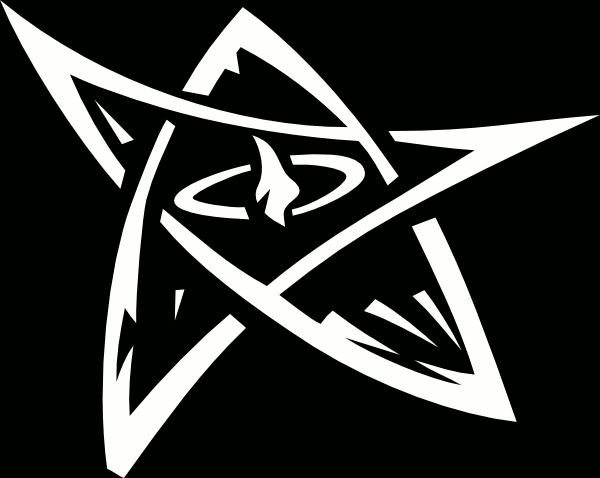
Sauron, The Great Old One


I've never really looked at the Elder Sign from H. P. Lovecraft's mythos very closely before...


...oh crap, Sauron was a Great Old One all along.


No wonder it took him so long to reappear on Middle-earth after Isildur vanquished him–the stars weren’t right.

Sunday, September 25, 2016

A Tale of Two Fraudulent Spiritualists

No Krevborna play report this week due to scheduling issues and technological failures. Instead, here's a play report from many years ago that I've been thinking about because it has some elements I want to incorporate into a future Krevborna campaign.

Only two players could make it to the game: perfect time to do a one-shot. We rolled up a couple new characters, and played to see what would happen. 


I had them roll to see what horrible thing their characters' did before they became "adventurers." Both players rolled the same result, which indicated that both characters were charlatans. Their background: "You once worked as an exorcist; however, you had no especial skill or ability to banish demonic presences. In fact, while most of your cases involved people who were mentally disturbed, your last involved a young woman who slew her family while possessed by a particularly vicious devil—you were powerless to stop her. If your secret is ever found out you will be hounded as a fraud and perhaps confronted by church officials." 

As a group, we decided that both characters were failed "spiritualists." The two characters (one fighter, one rogue) worked as a team of exorcists, even though both were complete frauds. 

Of course, the job these two former charlatans got sent on related to the family they ripped off and exploited: they were to infiltrate the house where they failed to exorcise an entity from the youngest daughter of the family and retrieve a rare book that the family had stolen from an occult bookshop.

What these two low-lifes don’t know is that after the events of the failed exorcism, the family took the attitude of "If you can’t beat ’em, join ’em" and began to do the bidding of the presence inhabiting their daughter's body. They've had their agents steal the grimoire because the thing wants to open a gate to bring the rest of his foul cohort into the world.

Things...went badly. Botched plans, bad rolls, and chance encounters within the house led to a moment where one character (the fighter) was suspended above a pit of acidic ooze and was holding on to the thief's hand for dear life...and then he failed his roll to climb back up from the trap he'd sprung. The thief watched in horror as his friend and fellow cheat was dissolved. Unfortunately, the fighter’s death screams brought the rest of the family/cult running. The remaining character now surrounded by a circle of knife-wielding cultists, we closed the curtains on this sad scene.

Total party kill. The players loved it.

Friday, September 23, 2016

Image of the Beast and Blown

Kate and Jack discuss Image of the Beast and its sequel Blown by Philip José Farmer. Released in 1968 and 1969 by adult science fiction publisher Essex House, Kate describes these ultra-explicit, super-bizarre novels as "like the monster mash version of Georges Bataille's Story of the Eye." But that's only part of the picture as we follow private detective Herald Childe on his journey into a world of monsters, ritual murder, and warring horror memorabilia collectors.
 The guest reader is man of mystery Baron XIII, who has the distinction of being Kate's most frequently punched-in-the-head friend. Baron XIII reveals his seven-day drawing challenge in exchange for reading one of the most extreme passages from these books.
Are these books sexy? Will we learn anything about Philip José Farmer's sexual preferences? What lives in that one character's nether regions?  What does Lord Byron have to do with all of this? Tune in to this episode of Bad Books for Bad People to find out!
Listen here!

We're also now on iTunes and Google Play.

Thursday, September 22, 2016

Grand Guignol, Reading Like a Victorian, Fascist Building

My dear friend and co-conspirator Tenebrous Kate has a great piece on the recently-reissued Theatre of Fear and Horror: The Grisly Spectacle of the Grand Guignol of Paris and an interview with the book's author, Mel Gordon. The book and the interview are must-reads. (by Tenebrous Kate for Heathen Harvest)


Want to read Victorian novels as they were originally read? This site does the heavy-lifting to give you the full Victorian experience: A Way to Read 19th-Century Novels Serially and in Their Cultural Contexts.


The Fascist Building in Upper Manhattan. (by Caroline Wazer for Atlas Obscura.)