Tuesday, April 26, 2022

Demon Lord vs. DnD: Classes and Paths


I had big hopes and dreams for doing a series of comparative posts contrasting 5e D&D and Shadow of the Demon Lord. Last year I managed to write two of those posts: one on the games' basic mechanics and one on D&D's "races" vs. SotDL's "ancestries." Unfortunately, the series petered out for one reason or another. Since this incomplete series has felt like it's been hanging over my head, it's time to get back into the thick of things. In this installment, I'll be talking about the differences, similarities, and quirks of D&D's classes vs. SotDL's paths.

D&D's classes are so iconic at this point that they hardly need introduction; classes such as fighter, paladin, cleric, and wizard are part of the lingua franca of fantasy rpgs at this point, defining the character archetypes expected to be available to players. Each class comes pre-packaged with its own fictional conventions. For example, if you're thinking of playing a strong warrior who relies on heavy armor and a shield for protection, you pick fighter or paladin. If you want a more agile combatant, you probably opt to make a rogue or monk instead.

The wrinkle that 5e introduced to D&D's class structure is the notion of picking a subclass. At first, second, or third level (depending on the class in question), you pick a subclass that tailors the "generic" class toward a more focused or specific archetype. For example, a rogue might be an assassin, a thief, a swashbuckler, or a scout. This choice adds different abilities and skews the character toward a particular style of play. If you pick scout as your rogue subclass, expect to use your nature skills; if you pick swashbuckler, you're likely to take more of a social role and engage in melee duels where possible. 

Subclasses provide a nice bit of differentiation between characters of the same class and expand the available options. They're necessary, as 5e has been quite reluctant to introduce new base classes. (The only new class to appear outside of the Player's Handbook is the artificer introduced in the 5e Eberron book.) A good subclass can make a class that was previously unappealing seem interesting and worth a try. That said, not all subclasses are created equal in 5e. Without house rules, the Way of the Four Elements monk subclass is notoriously disappointing, and the pre-errata Beast Master ranger in the PHB doesn't really satisfy the fantasy of having a powerful animal pet. 

Additionally, it's a shame that many of the subclasses are held off until you reach third level; this can lend the feeling of not really getting to play the character you want for the first few levels. On the other hand, the first two levels in 5e D&D go by fairly quickly, often in about three sessions, so it might not be too arduous of a wait. Nevertheless, it does feel strange that some characters get their subclasses earlier than others.

In contrast to D&D's classes, SotDL has paths. Paths are divided into three tiers: novice, expert, and master. These are somewhat analogous to 4e's heroic, paragon, and epic tiers, though they are much less "high-powered fantasy" in execution. Characters obtain a novice path when the party reaches first level. Novice paths represent broad fantasy archetypes: magician, priest, rogue, and warrior. Each defines a basic direction for your character. Warriors specialize in fighting, magicians excel at magic, and priests split the difference between them (and have a slight emphasis on providing bonuses to others). Rogues are like a very small salad bar; you can choose abilities from their available options to make the classic "thief," but you can also grab a little magic or other specialties to stray from D&D's vision of the fantasy scoundrel. The novice path you choose at first level provides additional abilities at levels two, five, and eight.

Expert paths function a bit like 5e's subclasses. You pick an expert path when your party reaches third level to further specialize and tailor your character's abilities. You might pick an expert path that builds on the abilities you already have, such as picking the fighter expert path to emphasize your warrior's martial prowess, or you might pick an expert path that gives you access to a totally different suite of abilities, such as picking the sorcerer path to add some magic to your warrior. Your expert path provides additional abilities at levels six and nine.

When your party reaches seventh level, you pick a master path for your character. Master paths are essentially "capstones," providing one final piece of differentiation for your character. As with expert paths, you have free rein to pick whatever master path appeals to you. You might top off your fire-wielding magician by picking the pyromancer master path or polishing off your archery-focused rogue by picking the sharpshooter master path. Your master path provides additional abilities at tenth level--the final level in SotDL's progression.

D&D has a potential issue in that there are no meaningful choices to make about your character's growth once you've picked your subclass; after that, your character's mechanical development is more or less set in stone. SotDL solves that issue by allowing players to shape their character over the course of their growth at steady intervals. Since there are no restrictions on which expert or master paths you can pick, you aren't bound by a sense of linear progression. There are hundreds of expert and master paths scattered throughout SotDL's supplements, so the amount of personalization and variation you can achieve is astounding. 

However, some combinations of paths are more likely to see play than others. There probably isn't much cause to pick warrior, oracle, and illusionist as your novice, expert, and master paths, since the abilities from those paths don't have much synergy and it's hard to imagine what that character is all about from a roleplaying perspective.

Additionally, although SotDL adds a ton of options through its path system, it may still suffer from one issue that 5e also shares: you may have to wait for quite some time to feel like your character is really fulfilling the archetype you have in mind. It's entirely possible to make a character with a background in entertainment who focuses on song magic, but if you want to play a "bard" and will not be satisfied until it says "bard" on your character sheet, you're going to have to wait until seventh level because bard is a master path in SotDL. Similarly, if you want a "beastmaster" ranger, you're going to need to bide your time until the master path for that becomes available. That's an even longer wait than what D&D's subclass system makes you endure; seventh level is basically the start of SotDL's endgame tier--the beginning of the end, so to speak.

Of course, one thing that has to be addressed is the question of balance. It's here that an interesting difference in culture between fans of the two games is evident. Hardcore D&D fans on the internet seem to constantly moan about how some classes are "overpowered" and others are so underpowered that they are "broken." I generally think these concerns are overblown (most casual D&D fans don't even notice any power disparity between the classes in my experience), but there are issues that can come up in play. The paladin class, for example, does just seem to be better designed to fulfill its role than the ranger class does, for example. That doesn't make rangers unplayable, but it does feel like an area of 5e that didn't come out of the oven fully baked.

Some online SotDL fans, on the other hand, are more insistent that the paths are all exquisitely balanced, but I don't think that's entirely accurate either. In the novice paths, for example, there is a strange quirk at first level where rogues feel like they're better in combat than warriors. Warriors can take a negligibly higher amount of damage and get a bonus to their weapon attacks, but rogues get a bonus to their attacks and a bonus to their damage. The rogue's bonus can also apply to most rolls you'd want to make, not just attacks. It's hard not to feel like the rogue is just an immediately superior choice.

Also, it's odd that magician is the only novice path that doesn't ever get a boon to use for its core shtick: casting spells. This means that rogues and priests can potentially feel like more proficient spellcasters than the class that supposedly focuses on that ability. Again, the rogue rears its "pick me!" head: the rogue's ability to get a boon to attacks can apply to spell attacks and their bonus to damage can apply to spells--the latter another thing that neither the magician or priest get. Although the magician may get access to more magic than the rogue, the rogue's combo of bonus to spell attack rolls and spell attack damage sometimes makes them feel like the superior spellcaster in a lot of situations.

Balance issues are potentially exacerbated by expert and master paths that can vary wildly in power level. Remember, there are literally hundreds of them; it beggars belief to think that they have all been exactingly balanced against each other. It's hard to really say that paths that grant abilities to instantly slay a foe if the conditions are right, such as assassin, or the straight-up buffs that fighters get are equivalent to the bonus to nature skills and the ability to teleport between trees that the druid gets. 

Again, this doesn't mean that some paths are "traps" or that others are godlike in power, but it does mean that not every path is the equal of its peers. The disparity only becomes more apparent when you look at the expert and master paths from the less well-vetted supplements that followed after the core book, some of which have absolutely mind-bogglingly more powerful abilities when compared to the initial paths in the core rulebook. This also happens with some of the variant novice paths that have been written for the game; as an example, whenever the spellguard path comes up in conversations on the SotDL Discord...well, get ready for a lot of bitching about it. To be honest, "power creep" is an issue. 

The insistence that SotDL's paths are finely tuned things of beauty contrasts badly against the amount of conversation in SotDL spaces about "builds" and optimization. Ironically, this is the sort of thing that SotDL fans often accuse D&D fans of being obsessed with, but it's not at all uncommon among SotDL fans in my experience. Here's an example from the SotDL reddit:

Power gamers and minmaxers, like the poor, will always be among us. I think Jesus said that.

It's widely accepted that 5e D&D has balance issues in the higher levels; even if the "martial classes" are consistently capable, they're outpaced by the miraculous things that spellcasters can eventually do. There is some validity to that complaint, but I think it's both overstated in some ways and also highly dependent on the people you're playing with in others. 

Instead of addressing that issue, SotDL merely reverses its polarity. It's noticeable that SotDL's "martial paths" tend to deal more damage with their weapon attacks than its spellcasters do with their magic. Low-level damage-dealing cantrips feel like a poor choice, since they are a limited resource (no all-day cantrips here) that deliver damage on par, if not inferior to, basic weapon attacks. Even taking into account access to "area of effect" spells (which have their benefits mitigated by the fact that's better to deal a killing blow to one foe than it is to damage multiple foes due to the vagaries of the action economy), spells just aren't on par in a game that is, like the D&D chassis it's built upon, focused on combat. The end result in SotDL feels like an over-correction to D&D's fetish for magic This issue is only more pronounced when the characters face higher difficulty monsters, which tend to halve damage taken from spells.

One thing I do tend to like about SotDL's paths is how condensed they are in terms of information and the delivery of mechanics. As an example, consider the D&D paladin's Lay on Hands ability (on the left below) versus the SotDL paladin's Faith Healing ability (on the right below). They have the same intent, but the SotDL version is much terser and less "fatty" in terms of verbiage:

Since SotDL's paths only need to account for ten levels of play, versus D&D's twenty levels of character progression, there is far less cruft or "ribbon" abilities that are there for flavor. SotDL characters feel lean and mean; they have interesting abilities, but at no point does your sheet feel like it has too much stuff to keep track of on it. In comparison, a 5e character sheet often feels littered with things you've never used and probably never will. That said, their paired-down suite of abilities can sometimes make SotDL characters feel a little incomplete. Because abilities are tersely defined, parceled out according to a strict path progression, and few in number, sometimes there isn't room in a character's lifespan to get an ability that feels like it should be a natural feature of your character. 

Wednesday, April 13, 2022

The Keep

Episode 55: The Keep

F. Paul Wilson’s 1981 novel The Keep has one of the great pulp story setups: Nazis versus vampires … but it turns into something a little different. When Nazis occupy a castle in Romania, they unwittingly unleash an ancient evil and set the stage for an epic confrontation between supernatural powers that have clashed throughout the course of human history. Join Jack and Kate as they venture into this epic battlefield of historical horror!

Have you seen the Smith and Jones “Nazi Generals” sketch yet? What energy does the name “Glenn” exude? Who is cooler: Dracula’s friend or a wizard from Atlantis? And what does Donkey Kong have to do with all of this? All these questions and more will be explored in this episode of Bad Books for Bad People.

Sunday, April 3, 2022

Children of the Stones, Two Piece Puzzle, Manhunt, Devotion, and More

Things that brought me delight in March, 2022:


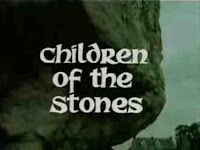
Children of the Stones

Children of the Stones is a British children's television series from 1977, but there's something you need to understand from the outset: this show is actually unsettling. The plot concerns a father and son who move to a village located within a Neolithic circle of standing stones; as newcomers to the village, it quickly becomes apparent that something nefarious involving pagan beliefs, strange technology, and the all too happy demeanor of the other villagers. There are moments of the uncanny here that are a bit unnerving: some of the imagery verges on nightmarish psychedelia, the soundtrack is suitably eerie, and the baroque plotline offers much more than you would expect from a show aimed at kids.


Rosalie Cunningham, Two Piece Puzzle

There's something truly extravagant about Rosalie Cunningham's solo work post-Purson; perhaps its a detectable feeling of the freedom to pursue whatever sound catches her ear without having to curb it to the want and needs of a band. Two Piece Puzzle isn't far afield from the psychedelia of Desire's Magic Theatre, but it's amazing that an album this intricately constructed doesn't come off as sterile or overly composed. The balance is just right throughout Two Piece Puzzle; there's always a danger of veering into kitsch, but instead the record feels like an artifact that's slipped through a wormhole from an alternate universe where everything is still groovy.


Gretchen Felker-Martin, Manhunt

I had built up quite a bit of hype in my head around Gretchen Felker-Martin's Manhunt, so much so that when it finally arrived I wasn't sure it could possibly live up to my heightened expectations for it. It exceeded them. Now, as much as I loved this novel, it's not one that I can recommend to everyone in good faith. It's absolutely brutal, both in terms of visceral violence and emotional heft. It also doesn't bow to any cultural niceties; this is the rare book that doesn't flinch from showing you true ugliness when it needs to. 

On paper, the pitch for Manhunt is pretty wild: a virus called t. rex has descended on the world, turning anyone with too much testosterone into a ravening cannibal rapist. Beth and Fran, two trans women, spend their time traveling the wilds of post-apocalyptic New England hunting the men who have succumbed to t. rex for their balls so that they can extract estrogen--the hormone they need to prevent themselves from sharing the same fate as the men they slay. Throw in an army of TERFs and an enclave of women who want to talk to the apocalypse's manager, and you've got the gist of what to expect. Again, Manhunt isn't going to be for everyone, but this is going to be a hard book to top for the best of the year, in my opinion.


Julia Gfrorer, Devotion

Devotion is a mini-comic containing four stories of love and sex. Devotion isn't really about narrative; the space constraints in a mini-comic of this format don't really allow for that. Instead, the comics in Devotion are all about the atmosphere, which is melancholic, pained, but also insistently noble in its sacrificial bent--there is an abnegation of the self at the heart of the concept of "devotion," something that I think is on full display here in this comics collected in this work. You can get a copy from Julia's Etsy shop here.


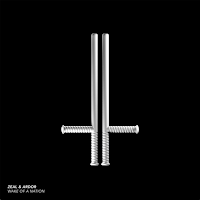
Zeal & Ardor, Wake of a Nation

I spent some time with Zeal & Ardor's third album last month, and my estimation of it hasn't really changed; I think it's a good album, but not a great one. It turns out that the fire that I was hoping for from it is in Wake of a Nation, the EP that proceeded it. This is the Zeal & Ardor I was hoping for from the self-titled disc! The rage, mourning, and riot is all here. I could do with a full album of this style, but perhaps the EP really is the right format for it as it never wears out its welcome.


Benedetta

Benedetta is based on the life of Sister Benedetta Carlini, a nun and Christian mystic who was condemned for her lesbian desires. As a film, Benedetta captures the curious hypocrisies of the Catholic Church: it views the body as a damaged vessel of sin, yet includes the Song of Songs among its canonical texts; the possibility of the miraculous is taken as a given, but the very idea of divine manifestation is left open to fallible earthly judgement; God is the basis of love, but not all love is viewed through the same lens. As a Paul Verhoeven film, it's also completely over the top and chock full of prurient eroticism. As it should be.


Mirka Andolfo, Mercy: The Fair Lady, The Frost, and The Fiend

It's fascinating that "Victorian Gothic Body Horror Comics" has become it's own fully fledged genre at this point. Mercy is a good example of the genre in action: it concerns otherworldly monsters who wear human bodies as disguises, and they're absolutely desperate to reopen the portal in a ruined mine that leads back to their home world. Mercy doesn't quite stick the landing, in my opinion characterization goes off the rails in the final act, but overall this was a pretty fun comic. I'll definitely check out the promised sequel if it ever materializes. 


Alison Rumfitt, Tell Me I'm Worthless

If you're wondering if Alison Rumfitt's Tell Me I'm Worthless is the book for you, consider this: one of the protagonists is haunted by Morrissey, who steps from a Smiths poster like the girl from The Ring crawling out of a tv. 

The book poses interesting questions (what if a haunted house was fascist?) and has some memorable moments (its riff on Bluebeard is particularly fine), but it also has a few flaws. Tonally, the novel feels like an off-balance combination of Bizarro fiction, self-serious theory-based capital L Literature, and traditional horror; the seams show and it oddly relegates its larger points to on-the-nose imagery. (I wish there was a way to spoiler tag on blogger because one of them is a doozie that I'd love to share. It's so gonzo it wouldn't be out of play in, say, the film Society.) 

I'm also not convinced that all of the novel's experiments with form work or are strictly necessary. That said, what Tell Me I'm Worthless does better than any other novel I could name is illustrate what a fresh hell the Very Online have made for themselves. I don't generally like to speculate which beliefs belong to a novel's characters and which are extensions of the author's point of view, but Tell Me I'm Worthless does feel like it's too closely in conversation with Twitter-style politics--with all the simplistic takes over actual nuance that implies.


Critical Role: Call of the Netherdeep

Call of the Netherdeep, a campaign set in Critical Role's bespoke D&D setting, surprisingly has a lot going for it. Underwater adventures are pretty rare, but this gives that premise a pretty full consideration. The idea of an alien substance called ruidium that corrupt magic items and monsters is pretty fun; it can also poison the characters in your game. (The tendrils that grow as you flip pages in the book is a nice touch.) Call of the Netherdeep also uses the idea of a rival party that develops in power and changes as the campaign progresses to good effect. I'm still digesting the contents of the book (it's long, these things take time), but this seems like a pretty strong entry in 5e's campaign offerings.  


Regina Maria Roche, The Children of the Abbey

I was pawing through a cardboard box of Dazzler back issues and old copies of Life Magazine at the antique store when I came upon this: a 1878 edition of Regina Maria Roche's The Children of the Abbey. Although it's little-known today, The Children of the Abbey was one of the best-selling novels of the 19th century. (Roche is mentioned as one of the Horrid Novelists in Jane Austen's Northanger Abbey and this novel was cited in Emma!) Of course, their was no price tag on this wonderful find, but I managed to get it for a mere four dollars. Treasure!


In Secret

I'm not sure I could say in good faith that In Secret is a great movie, but it's definitely my kind of movie. Based on Emile Zola's novel Thérèse Raquin, In Secret is a historical drama that is equal parts hot & sad, my personal favorite combination of flavors. The plot is exactly what you might expect from Zola: an unhappily married woman becomes embroiled in adultery and murder when she forms a too-strong connection with her husband's best friend. The naturalism Zola was known for really comes through; everything feels sordid, tortured, and destined to end in misery. Again, hot and sad, just the way I like it.


Rivers of Nihil, The Work

Rivers of Nihil's Where Owls Know My Name got a lot of buzz and a lot of critical acclaim, but for some reason I found it a bit impenetrable. The Work, the follow up to that album, is a different story; although the sonic palette they're working with is amazingly diverse (there's even a  bit that sounds suspiciously like a cock rock ballad), the tangents keep you on the edge of your seat, wondering what will come next. 


Messa, Close

I've enjoyed Messa's two previous albums, but Close feels like the band really finding its own voice. On Close, Messa fully assumes their role as the doom metal Dead Can Dance. Big songs, big range of influences, even bigger moods. This album is great fresh out of the wrapper, but I strongly suspect that it holds treasures and secrets that will only unveil themselves after repeated listens. Close is going to be in rotation for a very long time to come.


Ghost, Imperia

I can't help but think Ghost are ridiculously fun. Imperia follows suit with their other releases; it's got anthemic moments, earworms galore, and is fated to be deemed "not metal enough." All of which I am more than okay with. Also, it's pretty clever to pair the theme of fallen empires with so many musical inspirations lifted from 80s hair metal--itself a fallen empire, if you think about it. I've probably listen to this the most of anything new to me this month.


Print Weaver, Blood Heist, The Martial Cult of Blood Knight Gaius

Not only was I busy finishing up some of my own zine projects in March, I also made some time to check out a few game zines by other people. Let's take them one by one:

The Martial Cult of Blood Knight Gaius is a dungeon crawl intended for use with either Knave or B/X D&D. The adventure centers on vampires who eschew their unholy thirst for blood, drinking only from those they defeat in honorable combat...which may include any characters who venture into their monastery. Bloodheist is a self-contained game about playing thieves out to heist a valuable object from a vampire. Character creation is focused on random rolls, but the results are much more evocative than I'm used to. Print Weaver is the strangest of the lot, being a fantasy game where character creation is guided by your unique fingerprints!


Katsura Hoshino, D.Gray-Man vols. 7-9

With Allen Walker side-lined by injury, the rest of the cast gets a chance to shine in these volumes of D.Gray-Man. The gang takes part in a harrowing and tragic sea battle on the way to Japan. Things don't get much better when they reach Japan, as they find that the nation is the domain of the Millennium Earl and his army of akuma. It's nice to see the return of Miranda Lotto, I think she's quickly becoming my favorite character. The revelation of the new form of Allan's powers is a little wild; honestly not sure where that's going. We'll see when I tackle the next few volumes in April.


Lychgate, Also Sprach Futura

I'm not sure Lychgate have made a single misstep in their musical offerings. Great album followed by great album, all the way down. On Also Sprach Futura, an ep in between larger releases, the band shoots for the stars and gets a little sci-fi. The sound is still extreme metal, with a Gothic edge to it, but there's enough modulation here to let you know that they've headed to space for the time being.


Susanna Clarke, Piranesi

I had been meaning to read Susanna Clarke's Piranesi since it came out, but something or other was always coming up and getting in the way. Thankfully, I finally found the time; this novel is a treat. A man wanders a world of statues, halls, and tides, his only "friend" the strange Other who seems to be using him for an obscure purpose. As the enigmatic story unfolds, it involves quack academics, other worlds, occultists, and some fairly interesting thoughts about how we acquire and maintain a sense of self. I know some readers were disappointed in Piranesi's ending, but it all worked for me.


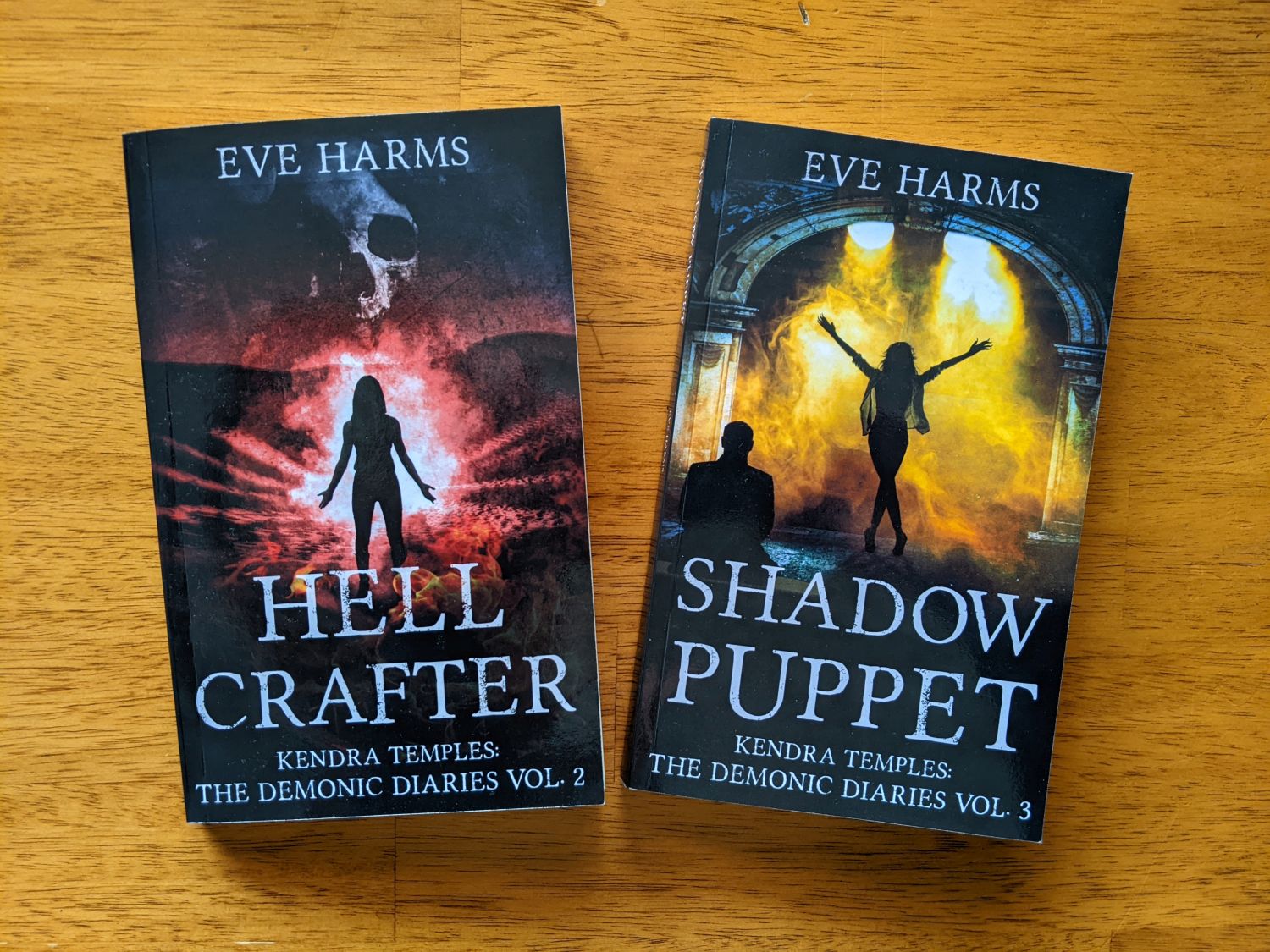
Eve Harms, Hellcrafter and Shadow Puppet

I had also meant to find the time to read Hellcrafter and Shadow Puppet directly after reading The Secret Name, the first volume in the series, but as always things came up. So it goes. 

Imagine if the heroine in Buffy the Vampire Slayer was a doofus with a blog, and you're on the right track with Kendra Temples. In Hellcrafter, she is given a pulp fantasy paperback from the 70s that seems to indicate that her dead boyfriend is traveling through a hellworld...and that it might be possible to save him. Shadow Puppet has djinn, goth clubs, possession, and the like. Both are fast reads, very entertaining and light, perfect for in between more serious or weighty tomes.


Brent Hayward, The Fecund's Melancholy Daughter

Anne from DIY & Dragons recommended Brent Hayward's The Fecund's Melancholy Daughter to me ages ago; I finally got around to reading it in March, and what an unexpected pleasure it is! Attempting to describe the plot without spoiling any of its reveals feels like a fool's errand. Suffice to say, it involves a city riven by class tensions defined along the lines of medieval humors, an imprisoned monster who gives birth after consuming dreams, decadent ennui, and strange things happening in space. I definitely recommend this novel for fans of M. John Harrison's Viriconium books or maybe even K.J. Bishop's The Etched City


Stephen Jones (ed.), Clive Barker's Shadows in Eden

Shadows in Eden is a collection of writings about Clive Barker and his work. I had a copy of this in the 90s, but I suspect I lent it to someone who disappeared with it into the mists of time. Invaluable resource that it is, since I've been teaching Clive Barker's Books of Blood this semester, I decided I'd like to have this back in my life. Nice to see you again, old friend.


Isabel Fall, "I Sexually Identify as an Attack Helicopter"

I taught "I Sexually Identify as an Attack Helicopter" this month as part of my lit class. Very interesting reactions from students. Worth noting: they were both unaware of the story and unaware of the controversy surrounding it. This was their first, unsullied encounter with it. 

I feel like they picked up on everything the takes on Twitter missed, but then, they read past the title and have a different relationship to memes than older sff people do. To them, the central relationship was read as tender and actually open-hearted. The ending that gestures toward and always changing and evolving sense of what gender, sex, and identity are made sense to them, but then, I find it hard to see why people took issue with that--or with the story in general. They also picked up on how the story is critical of the military-industrial complex, but then they would...they aren't primed to pick up any awards from a Raytheon-funded convention. (Gray!)


The Woman in Black

I'm quite familiar with the Daniel Radcliffe-helmed adaptation of Susan Hill's The Woman in Black, but somehow I had never seen the earlier film version, even though it was frequently mentioned in hushed, still-terrified tones by the Brits of my acquaintance when I lived in London. Someone on my Discord mentioned that it was available to watch on Youtube, and I can now report that it indeed a creepy little film that sticks with you. I can see why this version of The Woman in Black was foundational for so many people of a certain era.


F. Paul Wilson, The Keep

This was a Bad Books for Bad People read, so as always I will have a lot more to say about it with Tenebrous Kateon our episode about it. I've had a copy of F. Paul Wilson's The Keep on my shelf for a very long time, and I never got around to reading it, so I'm glad that Kate picking this as our book for March actually pushed me to read it--even though, as you'll hear if you listen to the episode, this is a book I did end up having some problems with! I really do think the first-to-middle bit was pretty fun, but that last 50-75 pages become a struggle when the plot twist hit.

Thursday, March 24, 2022

You're Haunting Me, Unstoppable, The Woman Who Fell to Earth

Three howls of the damned:

Blackbriar, "You're Haunting Me"

Ad Infinitum, "Unstoppable"

Cadaveria, "The Woman Who Fell to Earth"

Wednesday, March 16, 2022

The TotGaD Discord is Open

Tired of the same cyclical discourse? I've made my personal Discord server open to anyone who wants to stop by and hang out. We mostly talk about rpgs and related nerd ephemera, but off-topic chit-chat is welcome as well. 

We also try to keep the server open for people who want to workshop their game content or put together a group to get a game going. I try to regularly run games, so if you've been wanting to play and haven't found anybody willing to DM--roll up.

Remember playing games instead of just talking about them? Great times, right? The server just had a major refresh, which means there's plenty of room to start some new conversations.

Click here for the invite link.

The rules for the server are pretty basic. If you show up looking to be chill and not be an asshole, you won't have a problem.

1. Be cool. It should go without saying that if you are racist, sexist, transphobic, etc., you will be banned. If you are rude to me in particular, you will be banned. 

2. Adult content and adult language are permitted on the server. If you post explicit images (genitals, gore) please be considerate and put them behind a spoiler tag.

3. We support creative work regardless of content. If you see something that makes you uncomfortable, navigate away. 

4. This server is open to discussion of rpgs in general. We don’t support the idea that there is One True Way to play. No edition warring, no grogging, no indie snobbery, etc. If you have an axe to grind against a certain kind of game or style of play, do it elsewhere. If you can’t engage without frothing rage, find a different conversation to join.

5. Abide by the Discord community guidelines, found here: https://discord.com/guidelines

6. If you have a problem, contact a moderator via tag or private message.

Wednesday, March 2, 2022

Vampire: The Masquerade, Wulf's Bane, Nightmare Alley, and More

Things that brought be delight in February, 2022:


Vampire: The Masquerade (2nd Edition)

Right before the Blizzard of 1993, I bought a copy of the second-edition core book for Vampire: The Masquerade. Now, on a snow day in February of 2022, this arrived in the mail. Coincidence? Probably. But this book is an amazing hit of nostalgia, even though we only played Vampire a couple of times in high school. Maybe it's time to pull a "reverse OSR guy" in which I, a D&D player of many years, pack it in and make a swerve toward the White Wolf Renaissance and pretend like I was here rolling d10s the whole time.

In retrospect, it's hard to view Vampire as anything other than a sea-change. It isn't the wild "storygame" revolution that people sometimes paint it as, but the art and emphasis on style had a tremendous impact on the gaming scene for the rest of the 90s.


Joseph Delaney, Wulf's Bane

Although the Brother Wulf books are never going to capture the magic of Joseph Delaney's Last Apprentice series, they're still fun little reads set in a world of witches, monsters, and the magical folk who deal with them. This one's got a bit of everything: time travel, tulpas, shape-changing, and a bit of old-fashioned god slaying for good measure. I'm definitely looking forward to the third book in this series, particularly after I found out that Alice gets to narrate at least half of it! I'm looking forward to that in part because the weakness of the Brother Wulf books, at least as I perceive it, is that the characterization of the newer characters just isn't as rich as that in The Last Apprentice books.

Nightmare Alley

As a huge Guillermo del Toro fan, I was really looking forward to seeing Nightmare Alley, but I assumed it was going to be a good long while before I got to lay eyes on it since I'm not particularly keen on spending two and a half hours in a theater at the moment. Lo and behold, it came to HBO Max much sooner than I could have anticipated.

The movie has a lot to recommend it: the first chunk of it follows Stanton as he ingratiates himself into the carnie life and romances the beautiful Molly away from her ersatz family. In the second half, Stanton gets himself ridiculously in over his head, and it's obvious to everyone but Stanton. He and Molly have been performing as a psychic act for the monied elite of Buffalo, NY, but things take a turn when he begins to pass himself off as a genuine medium and becomes involved with a cold-hearted psychologist. You can see the hammer falling on his sordid little deceptions a mile away, but I can't fault the tension of its drop.


Hangman's Chair, A Loner

I was previously unfamiliar with the Parisian band Hangman's Chair, but A Loner turned out to be a great onboarding point. I'd characterize their sound as mostly coming from the world of doom metal, but there are elements of shoegaze and post-metal in the mix as well. Unafraid of shimmering beauty, things on A Loner are emotive throughout. I even detect a slight Type O Negative influence in the tone and color--minus the Brooklynite goomba humor, of course.


Creature Codex, Tome of Beasts, and Tome of Beasts 2

One challenge I set myself in my current D&D game is to not use any monsters from WotC's books, outside of mundane animals and summoned or animated creatures. I probably couldn't do it without Kobold Press's monster books. Creature Codex and the two Tomes of Beasts are great because not only do they add a lot of cool creatures that simply don't exist in baseline D&D, they also add creatures from more varied environments and creatures of types that have been a little neglected in the official offerings. Additionally, you really can't beat the surprise factor of an unexpected monster with abilities your players can't account for. "It does what now?" is pretty satisfying.


Tim Powers, On Stranger Tides

I have much more to say about On Stranger Tides over on the Bad Books for Bad People episode we did on it, but suffice to say that this Tim Powers novel gets an enthusiastic recommendation. If you like pirates, this is a must read. It weaves figures from the Golden Age of Piracy in with its magical fancy, which includes voodoo, ghost ships, and spirits, resulting in a really great example of what Powers can do with his "secret history" style of fiction; because he hews so closely to the historical record, On Stranger Tides feels strangely plausible for a tale in which loa-empowered pirates square off against each other over the fate of a woman's immortal soul.


The Lost Citadel

The Lost Citadel is a horror-fantasy themed setting for 5e D&D. The content of this project was quickly overshadowed by controversy when it was revealed that the lead designer on it was a sex pest of some sort. Green Ronin, the publishers of The Lost Citadel, didn't help matters by being insanely combative in their public relations. To be honest, I forgot I even had this thing: I found it, still in the original shipping box, while cleaning out a closet. 

The premise of The Lost Citadel is roughly "The Walking Dead-meets-D&D." Hordes of zombies have killed off most of the population; those who survive cower behind the walls of a dwarven citadel. Oh, and things didn't go too well for the dwarves either. Playing into the (somewhat tired) notion that "man is the real monster," human refugees have overthrown the dwarves and now use their erstwhile saviors as slaves. You can see where this is going. It's bleak. 

The book cuts down on the various options open to players in most D&D games, whittling the races to a handful and substituting its own bespoke classes in place of the usual suspects. Magic is less prevalent in The Lost Citadel across the board. Most of the book is devoted to setting; I'm not sure I'd ever use this book as is, but I certainly have some ideas for how using it to spice up the new Falkovnia as presented in Van Richten's Guide to Ravenloft.


Nocturna, Daughters of the Night

I come from an era where every other goth night was named "Nocturna," and even the cover of Daughters of the Night reminds me of that time period. (They don't make them like that anymore.) Daughters of the Night showcases a strong mix of Gothic metal, symphonic metal, and power metal; the unique twist is the presence of two singers sharing vocal duties. Admittedly, Nocturna doesn't really innovate in their nexus of genres, but this is a good, solid album overall.


Shaenon K. Garrity and Christopher Baldwin, The Dire Days of Willowweep Manor

The Dire Days of Willowweep Manor is pretty firmly rooted in the tradition of "portal fantasy": our protagonist is a teenager girl utterly immersed in the world of classic Gothic fiction who gets pulled into an alternate reality that is build from the archetypes and conventions that define the Gothic novel. What seems like it will be a Northanger Abbey-style parody of the Gothic gets turned on its head; ultimately, it is the heroine's deep knowledge and appreciation of the Gothic that saves the day.


Grim Hollow: The Campaign Guide and The Players Guide

Grim Hollow intrigued me, but the shipping price tag to get the books sent from Australia caused me to balk. Luckily, a few good eBay purchases got me The Campaign Guide, The Players Guide, and a cloth map that I will almost certainly forget to look at. Like The Lost Citadel above, Grim Hollow is decidedly "dark fantasy" in style and tone. The worldbuilding is admittedly not the most startling or memorable, but there are bits and pieces here I could see stealing. I particularly like the bespoke subclasses it offers, though as always I have no idea how "balanced" they are. Still, there's strong raw material here.


Funeral, Praesentialis in Aeternum

Praesentialis in Aeternum begins in an oddly Danny Elfman-esque place--morbid, but upbeat orchestration that make it sound like opening credits are about to roll, and you might just see the words "Tim" and "Burton" on the screen. But from there we immediately crash into the depths of funereal doom. It's been nearly a decade since the last Funeral album, but they haven't lost their touch. It's nice to see the stalwarts of the genre return with a chunky slab of the sound they helped put on the map.


Katsura Hoshino, D.Gray-Man vol. 4-6

Of course my interest in D.Gray-Man's continuing storyline picked up a bit as soon as the manga introduced a vampire tale arc. Although the arc doesn't resolve into the standard Gothic story (it does ultimately involve the D.Gray-Man mythos) it's a pretty fun detournment of the conventions of the vampire tale genre. The art is still sometimes a little inexplicable during action scenes, but the number of noteworthy panels does seem to be on the upswing. The sixth volume gets pretty wild, with a giant torso flying around and shooting energy beams out of where its arms should be. 


Old horror comics

My girlfriend found a pile of old horror comics stashed away at the antique market, so now my to-read stack has been replenished! A couple Charltons, a bunch of DCs, and even an issue from Modern Comics--whatever that is. (Apparently it was an imprint of Charlton.) The real question: will I read them now or do I have the will and patience to save them for the Halloween season?


Cult of Luna, The Long Road North

Cult of Luna dwells in the same doomy, crushing post-hardcore niche as Neurosis, but I generally find it easier to hear the hardcore influence in Cult of Luna's records. It sounds especially strong to me on The Long Road North, a disc that reminds of those rare occasions where you'd go to a hardcore show and encounter one band that stood out from the rest by being a bit more abstract, a little brainier, and dare I say leaning toward the epic. The Long Road North is the kind of release that will take time to fully digest, but I wouldn't be surprised if this ends up being one of the best of the year. 


Marcus Sedgwick, The Kiss of Death

The Kiss of Death is a sequel of sorts to Marcus Sedgwick's My Swordhand is Singing, a book I read back in 2020. The Kiss of Death doesn't pick up where the previous book left off, nor does it share the same cast of characters. The action shifts from Transylvania to Venice, where two men have gone missing and their children, an apothecary in training and a gothy girl with a sharp tongue, band together to find them. What they discover is a mystery involving the mother of all vampires, a cult that has infiltrated the highest levels of the Church, and a grizzled hunter of the undead granted a terrible immortality by the enchanted sword he wields.

I really enjoyed the way My Swordhand is Singing delved back into the folklore of the vampire and the way it crafted a historical monster-hunting adventure. The Kiss of Death had a bit less of that vibe, though I did appreciate the Venetian setting and the new characters it presented. As an ending, it's a little loose--in this instance I think I would have preferred either a bigger finish or something more concrete--but I liked this one enough to pull the trigger on a few more of Sedgwick's books.

Vampire: The Masquerade supplements

The thing about old Vampire, as I discovered high on the rush of nostalgia, is that many of the supplements for it are dirt cheap. There must be so many in circulation; my advice: check Craigslist and eBay to see if someone is trying to unload a big stack of them, like the ones pictured here. Absolute 90s time travel. But...what should I do with them? Get a Vampire game going using the old rules, warts and all? A series of reviews of the Clanbooks in the order they were published? Something has got to give with this fantastic pile.


Sabbat: The Black Hand

It isn't all vintage Vampire rpg supplements up in here in the month of February; the new Sabbat book for fifth-edition Vampire is also getting some love. Hardcore fans seem mad at this release, but being fairly untutored in the former lore I didn't really find anything that rustled my undead jimmies. This version of the Sabbat seems less cartoonishly evil than what I remember, and that seems like a good thing. I don't really mind that the Sabbat are more or less reserved as villains. Sorry, edgelords! Also, it's interesting that the art style relies less on the "fashion mag" aesthetic, and more on traditional illustration. 


Vampire Wars: The Antagonists

The vampire action just didn't let up in February! I've been looking for a copy of The Antagonists, a supplement for the Vampire Wars war game for a long time. The company who made it has it for sale, but the shipping price they were asking was absolutely insane for such a thin book. eBay once again pulled through; I bought this from an "estate sale" for under five bucks.

I'll probably never play Vampire Wars, in that it feels like playing anything face-to-face is a distant dream, but I enjoy this line as a curiosity. And honestly, the art has some verve to it, the named characters could be repurposed or serve as inspiration elsewhere, and maybe even the scenarios could be the start of something interesting if transposed to a tabletop rpg.

Zeal & Ardor, self-titled

It wouldn't be fair to say that Zeal & Ardor's self-titled album, their third full-length, is a disappointment; rather, it's probably more true that it didn't give me exactly what I want. Their debut, Devil is Fine, sounded like the start of something; it wasn't fully realized but it reeked of promise. The follow up, Stranger Fruit, gave me exactly the combination of gospel, soul, and black metal I had been hoping for--it felt like a culmination of all the best bits finally coming together. 

My hope was that the self-titled record would continue in that vein, but it goes off in some new directions I don't love. The electronics are a little too prominent, and a little too peppy and upbeat in places; the post-rock elements feel a little too transcendent, when what I want out of Zeal & Ardor is hell on earth; there's also some bits that sound too much like NIN. That said, this really isn't a bad album: when it's on, it's on, but not every track here wins me over.


Colson Whitehead, The Underground Railroad

Colson Whitehead's The Underground Railroad is a magic lantern show that lets the many monstrous faces lurking beneath the mask of American ideology flicker into dreadful life. Cora, an escaped slave, makes her way north via a literalized underground railroad (it's a real system of secret train lines cutting through tunnels beneath the nation), but each stop that seems to promise freedom reveals a different shade of disappointment, oppression, untenable dreams, and broken promises. 

It's difficult not to compare The Underground Railroad against Toni Morrison's Beloved, in that both are fantastical literary events that engage with race and history in America. Beloved feels more harrowing to me, which is interesting because it's really The Underground Railroad that has the more ambiguous ending.


Malifaux Burns

Malifaux Burns is the latest expansion for the Malifaux miniature war game. It's definitely a "metaplot" expansion: the Burning Man (unfortunate name, makes me think of hippies in the desert) has come to Malifaux, infecting several characters with his fiery madness. Of course, it's all an excuse to update some models, bring some characters back into the game, and offer alternate ways of playing the crews you already own. The art is always a treat and the fiction bits are surprisingly readable, as is usual for the Malifaux line.


Clive Barker, Books of Blood volume 1

It's been a long time since I read the first volume of Clive Barker's Books of Blood, so I was overdue to give it a re-read. Imagine encountering this book when it first came out: you probably wouldn't have known who Clive Barker was, right? The raw ferocity and style coming off these stories would have felt like a crowbar popping open your skull and exposing your skull to fetid, unwholesome air. There are some absolute (and obvious) gems in here: the title story and "In the Hills, the Cities" are just audaciously perfect. And even the stories that didn't grab me with as much force the first time around, such as "Sex, Death and Starshine" or "Pig Blood Blues," now feel like monumental offerings.


Salome print

I picked this up at the antique store. My logic is very simple: if I find a cheap print of Salome, I buy a cheap print of Salome. This one is of Hungarian actress Sahary Djeli as the biblical temptress. According to the clipping on the back, she was known as the Lady of the Jewels because she was said to own more precious stones than any other woman in Europe, a claim that is almost certainly untrue. A bit of hokum does nothing to quench my ardor, of course.